Building materials play a major role in achieving thermal comfort and high energy efficiency in buildings. An informed selection of building materials can optimize the indoor temperature by 2 to 5 degrees Celsius and reduce energy consumption by up to 40 per cent. The building envelope is particularly crucial in controlling heat gains or losses inside a building, as well as in protecting its occupants from harsh external weather conditions.
Building insulation controls heat gains or losses through walls and roofs. It is particularly beneficial in cold climates, making it especially relevant for Nepal. However, the market for energy-efficient building materials, such as insulation, high SRI paints, walling materials, dynamic shading and high-performance glass, is still in a nascent stage in Nepal.
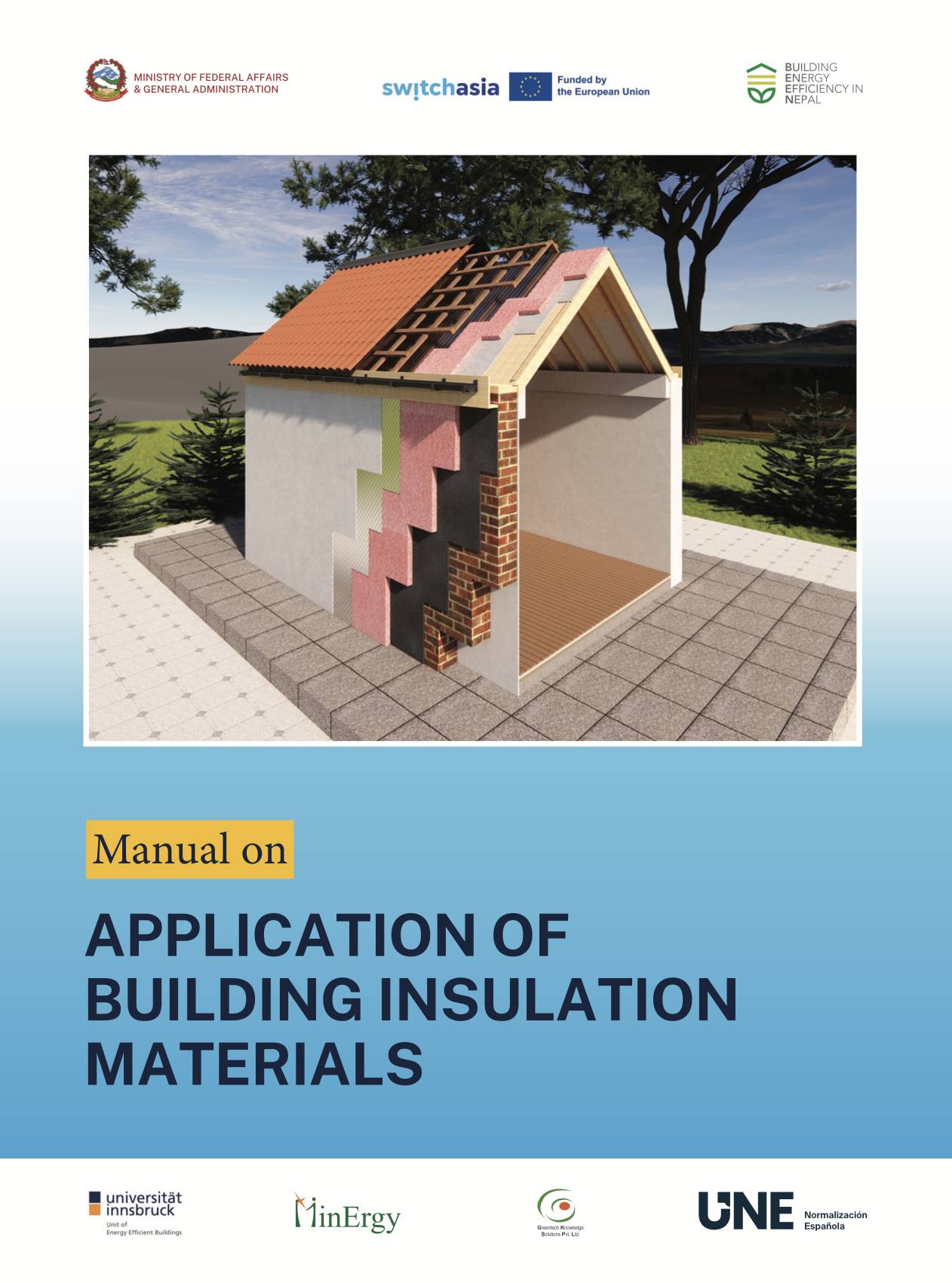
This manual provides an overview of building insulation materials, their thermal characteristics and how these affect the energy consumption and comfort levels in buildings. It also explores different types of insulation materials and the various compositions in which they can be applied to roof and walls. Additionally, it describes construction guidelines for these combinations.
Proper installation of insulation materials is essential to ensure maximum benefits to the building.
The manual is designed for both building designers, who select appropriate insulation for their projects, and construction workers, who are involved in the application of insulation material in buildings.
This manual has been developed under the project “Building Energy Efficiency in Nepal” (BEEN), supported by the SWITCH-Asia Grants of the European Union.
The authors seek ideas and case studies from the building construction industry in Nepal on building insulation.