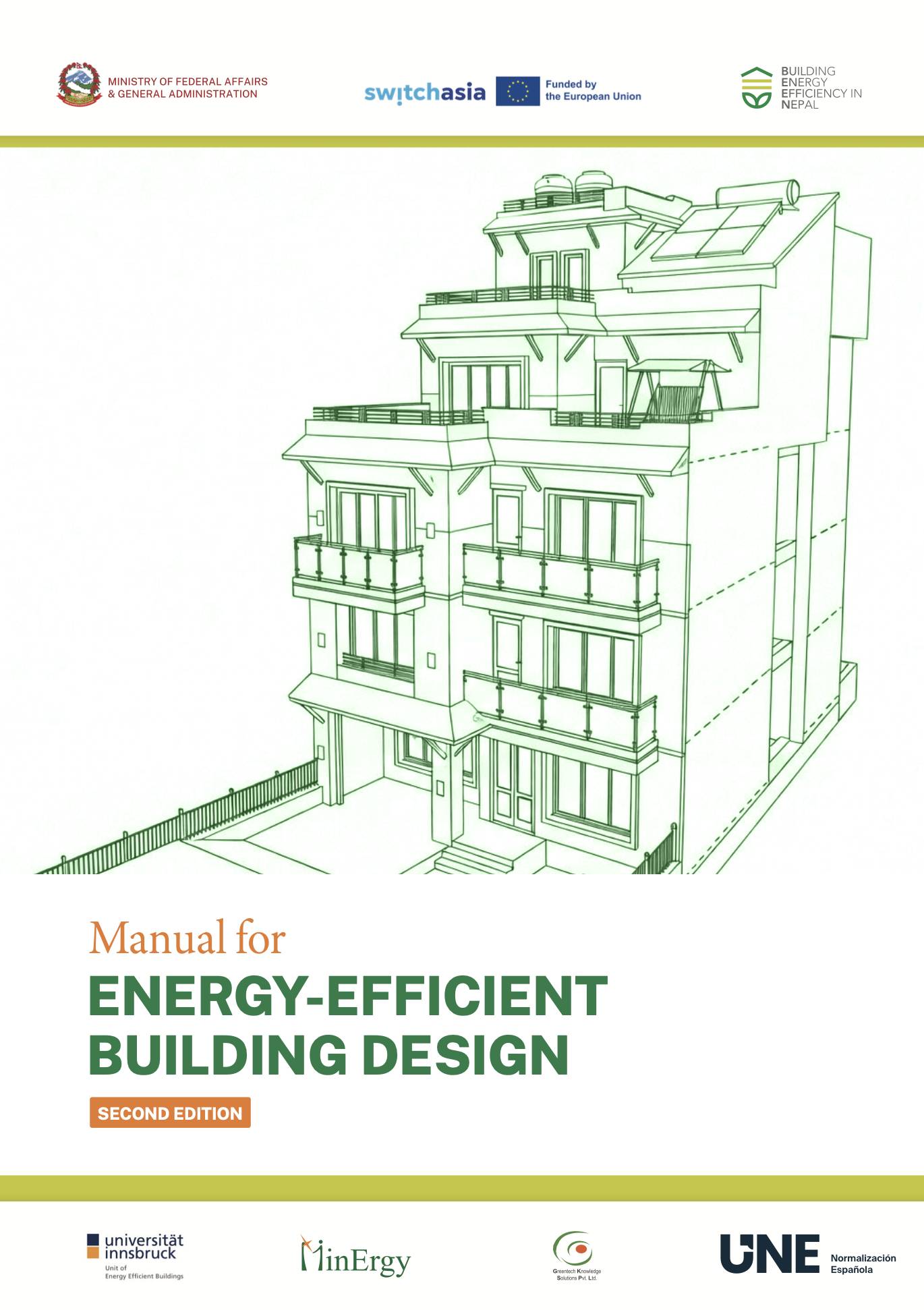
Energy consumption for space conditioning in buildings is in increasing trend in Nepal. Most of the buildings are continued to be designed without considering local climatic conditions, resulting in poor ventilation, excessive heat gain, or inadequate daylight, which leads to high energy use for heating, cooling, and lighting. Climate-responsive design and energy efficiency are often not prioritized during early stages of planning and design. Much of this can be addressed through simple, well-informed climate-responsive design decisions, such as optimizing the building envelope, ensuring proper orientation, enhancing insulation, designing effective windows and shading, using double-glazed windows, and selecting materials suitable for local climates.
Evidences demonstrated that buildings, designed considering local bio-climatic conditions, can reduce energy demand in its lifetime without compromising on better thermal comfort for users Limited understanding and application of building physics among design professionals has remained a key challenge. This “Manual for Energy-Efficient Building Design for Architects & Designers” has been developed to bridge that gap by supporting architects and engineers including building consulting firms in understanding how design decisions affect the energy performance and comfort of buildings. It provides fundamental knowledge and practical strategies to promote thermal comfort, visual comfort, and overall energy efficiency in buildings suited to Nepal’s diverse climatic conditions. Concepts are presented in a structured and easy- to-follow manner, from understanding how a building affects the thermal and visual comfort of its occupants to exploring passive design strategies, heat transfer mechanisms, and daylighting techniques.
This revised edition builds on the previous version with updated and expanded technical content, further enhancing its practical guidance for architects, engineers, and building professionals. The revision was prompted by the insights gained from the Training of Trainers, the experience of conducting several trainings as well as improvised based on the simulation results of various building typologies across four bio-climatic zones of Nepal. Based on the feedback and experiences of the trainers, this edition incorporates additional key topics on “Resource-Efficient Materials”, Heat Transfer through Fenestration”, and “Advanced Construction Technologies”. Efforts have been made to ensure better visualization and content clarity throughout the document. Key metrics and terminologies are incorporated aligning to Building By-law and Standard Operating Procedures (SOP) requirements. The content has also been revised with the gender and social inclusion lens to reflect on the thermal safety requirements of the vulnerable populations. It seeks to inspire professionals and provide them the guidance to integrate energy efficiency principles at every stage of the design process.
This Manual was developed as part of the “BUILDING Energy Efficiency in Nepal” (BEEN) project, funded by the European Union under the SWITCH-Asia Grants Programme.