Locations: South Asia and Central Asia (Ongoing)
Themes: Investments, Circular Economy, Climate
The Challenge
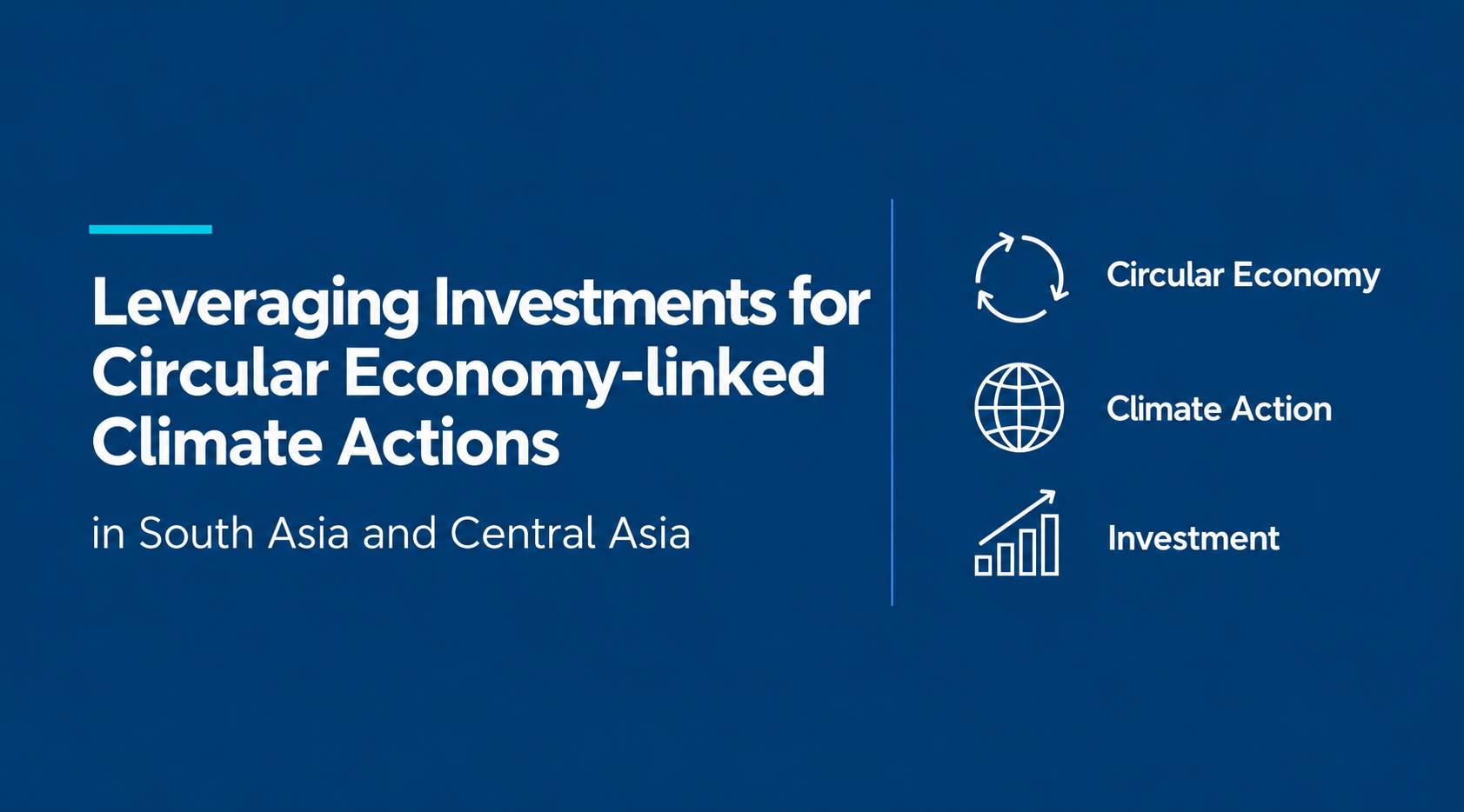
Countries across South Asia and Central Asia are increasingly integrating circular economy principles into their Nationally Determined Contributions (NDCs). With support from the EU SWITCH-Asia Programme, Bangladesh, Bhutan, Pakistan, Sri Lanka, Kazakhstan, Kyrgyzstan and Uzbekistan have taken initial steps to connect circular economy approaches with national climate ambitions. Translating these commitments into opportunities that attract investment, technology and business partnerships remains a critical challenge.
Consultations with EU Delegations have highlighted barriers including the perceived high cost of EU financing, fragmented approaches to blended finance, and limited connections between local demand and available EU technologies. Opportunities in areas such as circular construction, industrial resource efficiency, electronics, plastics and packaging remain insufficiently linked to coordinated investment strategies.
Addressing these gaps requires a strategic approach that connects national priorities with suitable technologies, financing instruments and enabling policies. It also requires identifying how circular solutions can move from subsidised pilots towards competitive, self-sustaining markets. Through Global Gateway, there is an opportunity to strengthen this connection between circular economy ambitions, climate action and EU investment.
Objectives
This Technical Advisory aims to support the translation of circular economy commitments in NDCs into strategic priorities for investment and implementation across South Asia and Central Asia.
Its specific objectives are to:
-
Identify priority investment opportunities for circular economy-linked climate actions, drawing on national commitments, market readiness and private sector capacity.
-
Explore EU technology and business partnerships that can support circular solutions and respond to partner countries’ needs.
-
Assess blended and concessional finance options that could lower the cost of capital and attract private investment.
-
Develop strategic country roadmaps to guide market transformation, inform national climate finance planning and support EU Delegations’ engagement under Global Gateway.
Way Forward
The Technical Advisory will combine regional analysis, stakeholder engagement and targeted country support through the following activities:
-
Develop two regional strategic papers, covering South Asia and Central Asia, with country-specific annexes identifying priority circular economy-climate actions, investment conditions, relevant EU technologies and opportunities for alignment with Global Gateway.
-
Select two to three countries for detailed support, based on consultations with EU Delegations and national stakeholders, considering country priorities, expressed interest, market potential and the enabling environment.
-
Organise technology showcases and stakeholder consultations, bringing together EU businesses, technology providers, industry associations, policymakers and local enterprises to explore solutions, business models and barriers to adoption.
-
Engage financial institutions and development partners to examine financing instruments and potential combinations of public, private and concessional resources that could support investment at scale.
-
Prepare and validate strategic roadmaps for the selected countries, setting out priority actions, pathways for technology transfer, indicative financing options and policy measures to support market development.
-
Support uptake and replication through guidance for national climate finance frameworks, NDC investment planning and Global Gateway programming, alongside practical tools and knowledge exchanges to inform similar initiatives in other regions.