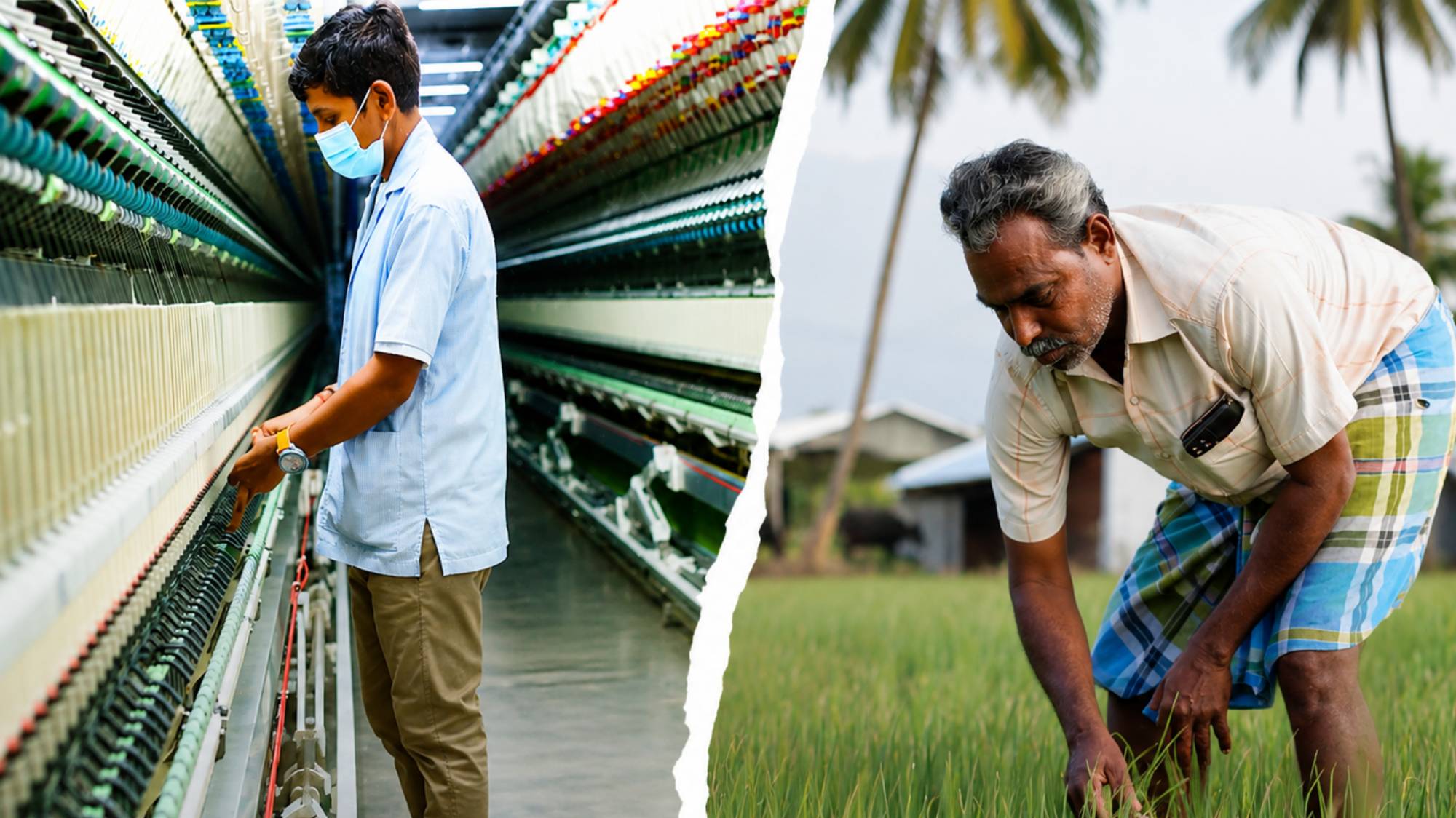
Transforming a sector from the ground up
Designers, fashion trends, catwalks… the world of fashion often makes us think of glamour, creativity, beauty and self-expression. But behind the colours, designs and shop windows lies a much more complex story. The textile industry connects millions of people across global value chains, from farmers cultivating cotton fields to workers and manufacturers producing garments for consumers around the world. And while the final products may represent style and aspiration, the journey behind them continues to face major sustainability challenges, including climate change impacts (the fashion and textiles sector emits approximately 8–10% of global GHG emissions), resource-intensive production, high chemical use, and the need for greater transparency and responsible consumption.
Not only is Asia-Pacific the world’s largest fashion production hub, but it is also the largest and fastest-growing market for fashion. In the region, India is the second-largest producer of textiles and garments and the fastest-growing large-scale market for fashion. So, in terms of both fashion production and consumption, India is one of the key frontiers where the tide of exploitative fast fashion needs to turn. The country is deeply integrated into international supply chains, with ~80% of its manufacturing capacity in MSMEs, operating across fragmented clusters with limited technical and financial capabilities. At the same time, textile manufacturers are under growing pressure to improve environmental performance, meet evolving sustainability requirements, and respond to rising expectations from consumers and markets. At the other end of the supply chain, smallholder cotton farmers are increasingly affected by unpredictable weather patterns and rising input costs.
Against this backdrop, the EU funded SWITCH-Asia Switching to Green & Fair Fashion: Advancing sustainable production and consumption in cotton & textile value chains project was launched to support the transition towards a more sustainable and fair cotton and textile sector in India. Over more than four years, the project brought together farmers, textile producers, industry associations and sustainability stakeholders to promote solutions that combine environmental responsibility, improved livelihoods and more sustainable business practices.
Why this project? Building a fairer and greener textile future
How can one support a complex sector with large resource footprints to transition towards more sustainable practices? The answer is not simple. Bringing sustainability to a garment requires changes across entire value chains, from cotton fields to mills and factories from brands to consumers.
For cotton farmers, particularly smallholders, adopting more sustainable practices often requires improving farming outcomes while dealing with growing risks and a lack of access to proven technologies and finance. At the same time, many textile manufacturers, especially micro, small and medium-sized enterprises (MSMEs), face their own challenges: complex sustainability requirements from buyers; limited access to technical expertise, relevant technologies and green finance; and uncertainty about the business case or ROI (return on investment) for investing in sustainable production practices and technologies. Fashion brands are also facing growing scrutiny from consumers and regulators on their sustainability claims and actual impact, and this in turn is increasing the demand for measurable change and credible sustainability impact information.
The premise of the project was therefore clear: sustainability needs to be made more practical, measurable and accessible for everyone involved in the textile value chain. Rather than being viewed only as a compliance requirement or an additional cost, sustainable production practices can strengthen competitiveness, improve market access and create new opportunities for farmers, manufacturers and brands alike.
To achieve this, the project developed and tested a range of interconnected solutions:
- Supporting climate-resilient cotton farming through digital technologies and circular solutions that help farmers improve resource efficiency and adapt to climate change.
- Deploying the SustainSwitch digital platform, available in local languages, to help textile MSMEs measure, monitor, and improve their sustainability performance through simplified ESG assessments, carbon footprint measurement (Scope 1, 2, and 3), improvements in planning, and alignment with emerging sustainability reporting requirements.
- Providing on-demand technical support for implementing sustainability practices through the Sustainability Clinic, enabling manufacturers to access expert guidance on how to address and implement sustainability challenges.
- Connecting businesses with solutions and markets through piloting innovative decarbonisation and chemical reduction solutions with tangible ROI and impact, connecting MSMEs with required technologies through a sustainability provider directory integrated with the SustainSwitch digital platform, and creating networking activities and engagement with brands seeking more transparent supply chains.
- Building capacity of MSMEs to adopt ESG reporting aligned with the BRSR framework and using this commitment as a tool for creating systems for sustainable production and better market access.
Together, these approaches aimed to move the sector from awareness to action, demonstrating that sustainability can become part of everyday business practices throughout the cotton and textile value chain.
Turning knowledge into action
After more than four years of implementation, the project's vision has translated into tangible results across the cotton and textile value chain. From cotton fields in rural India to textile factories, international brands, and consumers, the different initiatives have demonstrated that sustainability becomes meaningful when it delivers practical solutions to real-world challenges.
Supporting climate-resilient cotton farming
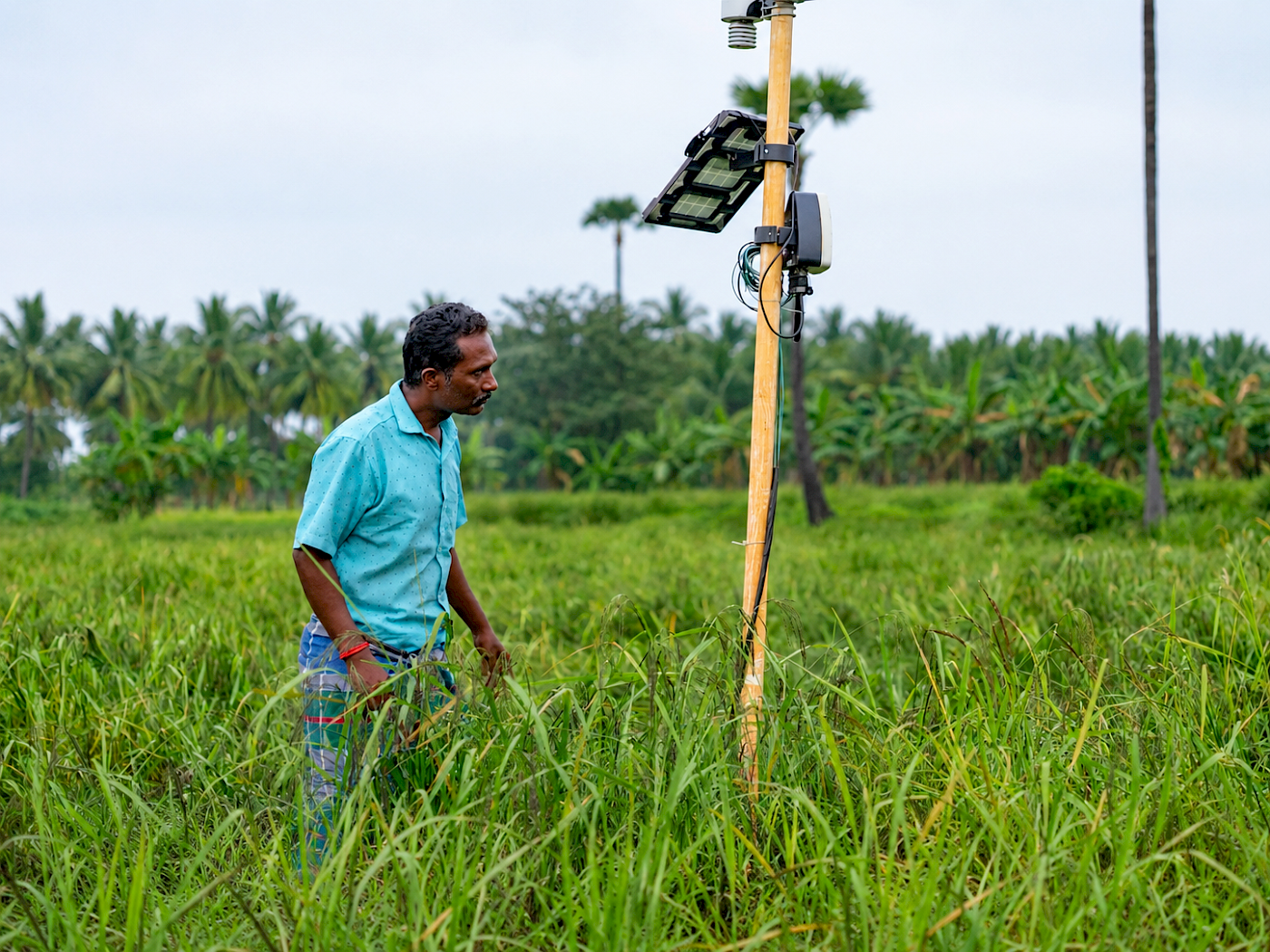
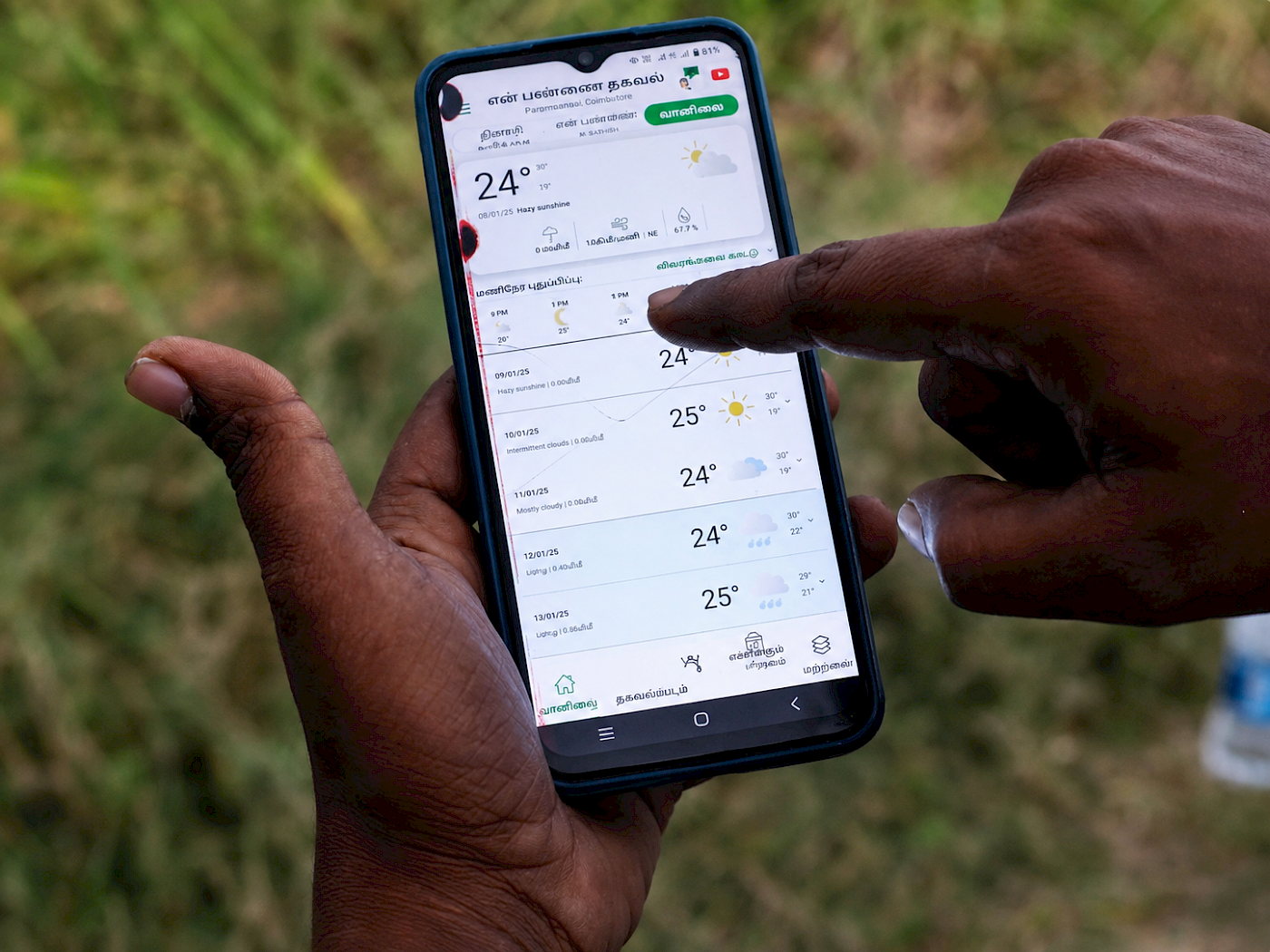
For cotton farmers, climate change is no longer a distant threat but an everyday reality. Unpredictable rainfall, increasing pest pressure, and rising production costs make it harder to maintain both yields and livelihoods. To help farmers adapt, the project introduced climate-smart pilot initiatives, including digital technologies based on IoT and AI (micro-weather monitoring and advisory solutions providing real-time information on rainfall, irrigation and pest management) and circular bio-waste management solutions such as biochar, which created measurable benefits for cotton farmers. Overall, the project ran pilots with farmer groups that reached more than 9,500 cotton farmers, equipping them with new knowledge and tools to strengthen climate resilience.
For Mr. Paramasivam, a cotton farmer and member of the Anandi Farmers Association in Palamedu, where the micro-weather station pilot was conducted, the benefits have been immediate:
The project supported us along with Anandi. They have provided us with Fyllo, a system that predicts rainfall in advance. This allows us to reduce irrigation accordingly. Based on weather conditions, Fyllo also alerts us of potential pest attacks through notifications. When we receive those alerts, we inform neighbouring farmers within a 1 km radius, helping protect crops across the village. This has proven to be highly beneficial for the community.
His experience illustrates how access to timely information can help farming communities respond more effectively to environmental challenges while strengthening cooperation among farmers. Early results indicate improved water-use efficiency and reduced reliance on pest-control inputs, while neighbouring producer groups have already expressed interest in replicating the approach.
Helping textile manufacturers turn sustainability into practice
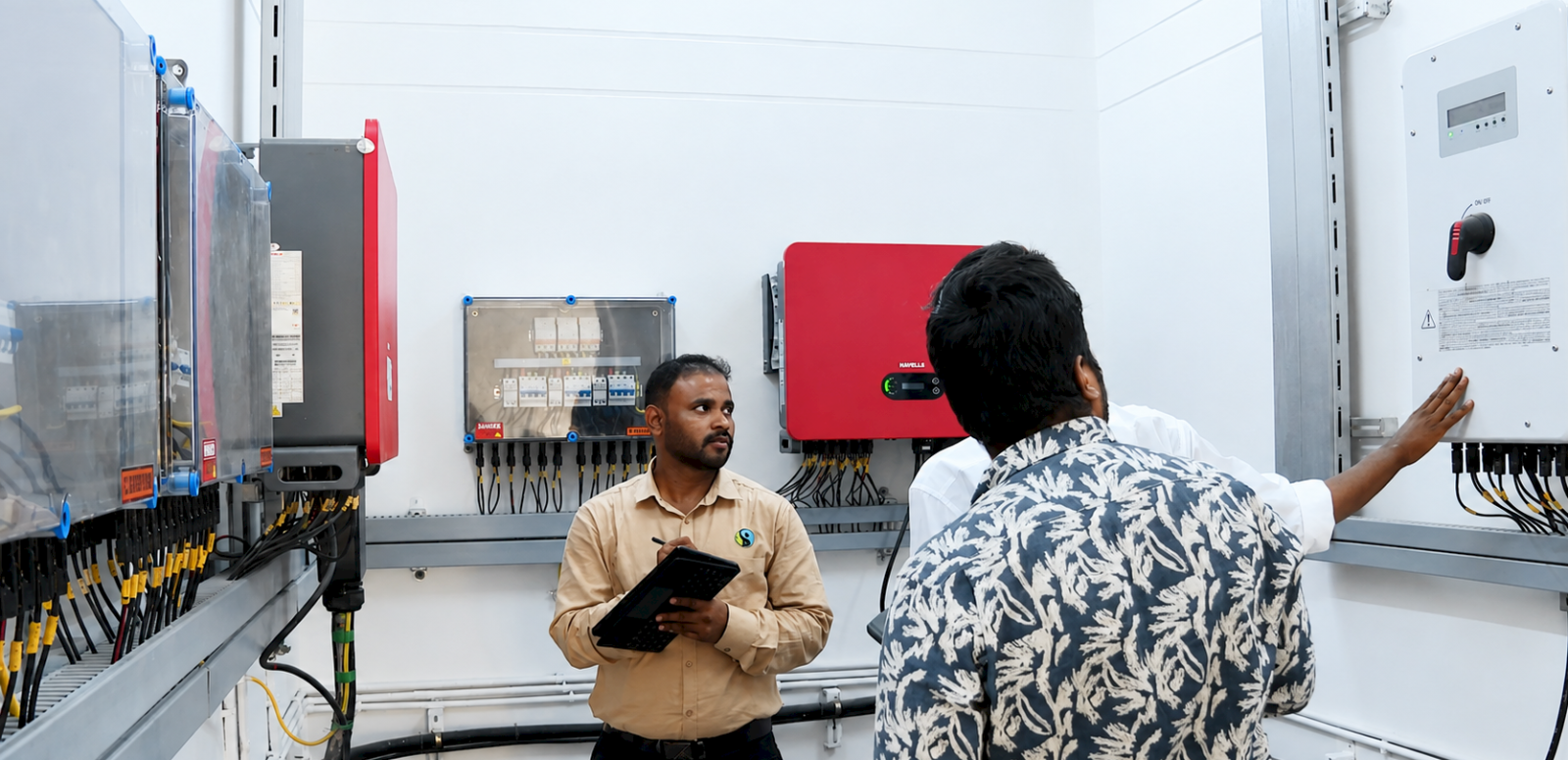
For many textile manufacturers (particularly MSMEs) the challenge of adopting sustainable production practices has many dimensions. First and foremost, there is often a lack of proper knowledge and understanding of how sustainability indicators are derived from operational information, what needs to change in the production systems, and what the cost and ROI of the investment would be. In addition, there is a lack of access to suitable technologies to achieve the improvements and limited access to finance to implement these changes given already tight cash flow. Finally, manufacturers face the challenge of connecting with buyers who value these practices and are willing to pay for them.
At the outset, therefore, the project focused on equipping MSMEs with the knowledge, tools and technical support needed to integrate sustainability into their daily operations. Over the course of the project, awareness events, training workshops and advisory services reached more than 580 textile manufacturers and producer organisations across Tamil Nadu, with more than 85% of them being MSMEs. These engagements were largely carried out in the textiles hub of Tiruppur, in collaboration with the local textile industry association, the Tiruppur Exporters’ Association (TEA), one of the most dynamic institutions in India leading sustainable textile production and exports. Participating businesses reported significant progress, particularly in their ability to self-calculate and measure indicators such as GHG emissions, water footprint, chemical use, and other environmental and social indicators needed for BRSR-based ESG reporting and brand reporting requirements.
The workshops also enabled capacity building for better waste management, environmental policy implementation, and the adoption of sustainable technologies, demonstrating that practical support can translate into measurable improvements. To further strengthen implementation, the project also established a network of over 100 solution providers to support factories in identifying directly relevant and accessible resource-efficient and sustainable production practices. The project conducted pilots with MSMEs on energy-efficiency technologies and the implementation of Right First Time (RFT) chemical management processes, and undertook detailed evaluations of environmental performance at 39 facilities, generating over 1,000 recommendations, both with and without capital expenditure (Capex), on how sustainability indicators could be improved at these facilities.
The project further introduced SustainSwitch, an innovative digital platform that enables MSMEs to overcome operational, technical, knowledge, commercial and financial hurdles to measure, report and improve their sustainability performance. Designed for MSMEs, it offers innovative features such as automatic recommendations for decarbonisation based on operational data, local-language guidance, connections with sustainability solution providers, and mobile applications for data capture. SustainSwitch is gaining traction with MSMEs in Tamil Nadu, helping them address the requirements of their buyers and other compliance needs.
Complementing the SustainSwitch digital platform, one of the project's most enduring initiatives is the Sustainability Clinic—a free, on-demand technical support helpline service that helps businesses demystify the sustainability implementation requirements.
Mr. Karthik K., Sustainability Manager at Poppy's Knitwear, described the value of the initiative:
Thanks to Fairtrade India, TEA and CSM for launching The Sustainability Clinic Platform. It's an incredible initiative to support Tirupur manufacturers by addressing sustainability-related queries in local languages. Such efforts are pivotal in empowering the industry with clarity, actionable knowledge, and practical guidance to drive meaningful progress towards a sustainable future.
The platform has already become a trusted resource for manufacturers. Mr. Suresh, Sustainability Expert at Eastman Exports, turned to the Sustainability Clinic when his team needed clarification on chemical compliance requirements:
The team at the Sustainability Clinic was highly responsive, offering clear and detailed guidance on CPSIA requirements. I sincerely thank them for their expertise and support, which has significantly enhanced our knowledge.
Connecting sustainable producers with markets and consumers
Supporting sustainable production is only part of the equation. Farmers and manufacturers also need access to markets that recognise and reward their efforts, while consumers increasingly seek trustworthy information about the environmental impact of the products they buy.
Throughout the project, over 63 MSMEs and large companies, brands and retailers from the EU and India, have been actively exploring opportunities to source from sustainable and Fairtrade cotton supply chains in India. Of these, over 33 companies have confirmed sourcing commitments on Fairtrade terms from India.
A key milestone of the project has been the first International Fairtrade Textile Forum, held in Paris in October 2024, which brought together stakeholders from across the global textile value chain. Among various key discussions and presentations, the Forum showcased new independent research conducted by the project on Fairtrade-certified cotton in India and its environmental performance. The study found that Fairtrade Organic and In Conversion (FOIC) cotton production in India generated up to 34% (1,025 kg CO₂e/ha vs. 1,563 kg CO₂e/ha) lower greenhouse gas emissions and a 27% (4,410 vs. 5,229 litres/kg of seed cotton) lower water footprint than conventional cotton, demonstrating the environmental benefits of improved soil, water, and input management. This information has provided valuable evidence for brands, policymakers, and consumers, who have been able to use it for a wide range of operational, sourcing, communications, and reporting requirements.
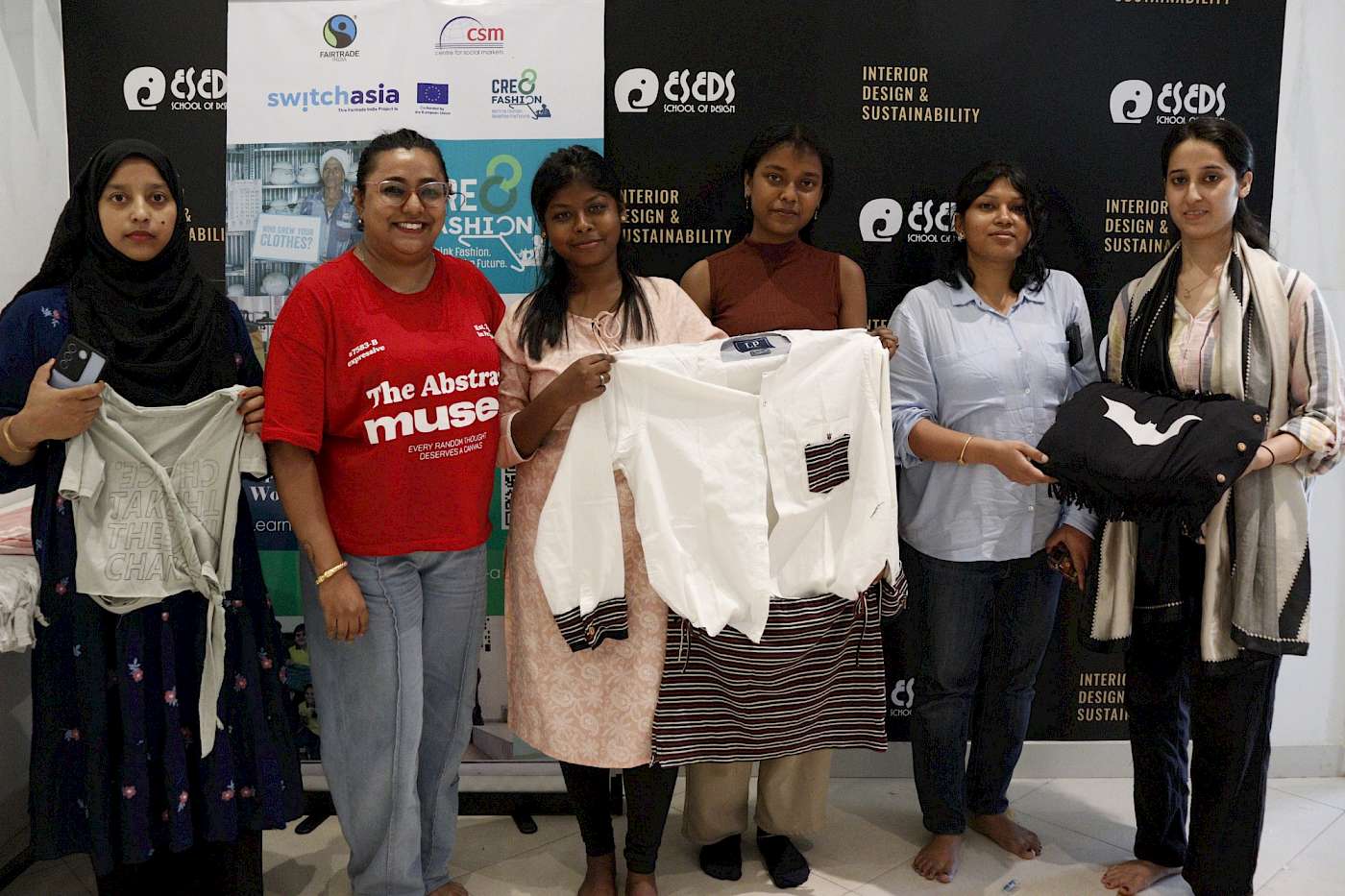
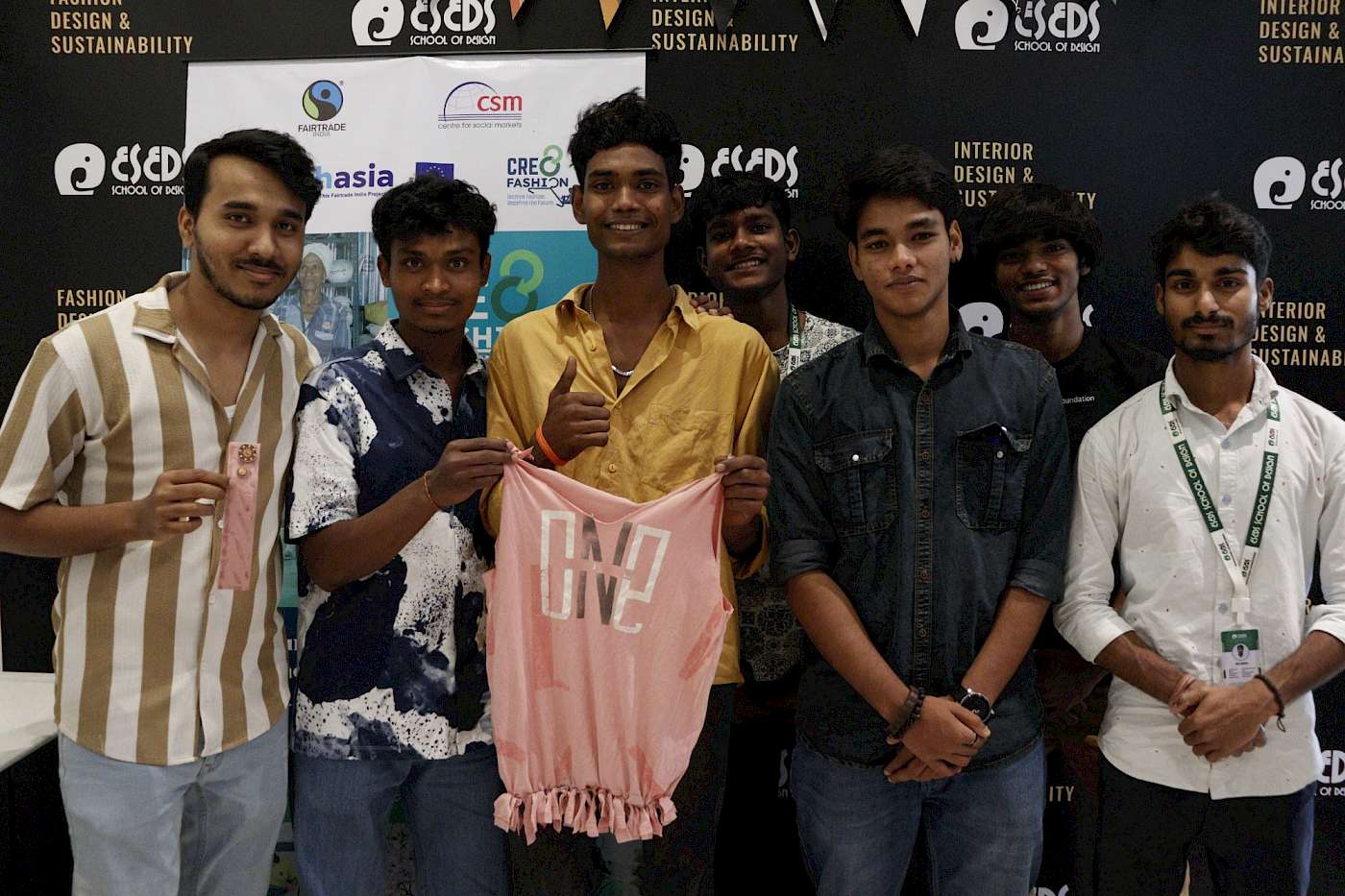
The project also recognised that lasting change depends on informed consumers. Through the Sustainable Fashion Consumption – Youth Campaign, built around the RE8 principles (Rethink, Refuse, Reduce, Reuse, Repair, Repurpose, Recycle, and Restore), young people across India were encouraged to reflect on the environmental and social impacts of their purchasing choices. The RE8 campaign, known as CRE8, exceeded expectations, achieving active engagement and participation from just over 50,000 young people and urban consumers across India through schools and colleges nationwide. Importantly, the initiative continues beyond the project through trained teachers who have integrated sustainable fashion concepts into their classroom activities.
Way forward: continuing the transition towards sustainable fashion
As the Switching to Green & Fair Fashion project comes to an end in September 2026, its legacy extends beyond the activities implemented during its lifetime. The project has demonstrated that transforming the textile sector requires collaboration across the entire value chain: farmers equipped with climate-smart solutions, manufacturers supported with practical sustainability knowledge, brands connected to more transparent supply chains, and consumers empowered to make informed choices.
Perhaps its greatest achievement is not only the number of people reached or the tools developed, but the partnerships, knowledge, and practical solutions that will continue beyond the project's lifetime. Farmers are sharing climate-smart practices with neighbouring communities, manufacturers continue to benefit from technical support and sustainability resources, and the evidence generated through independent research is helping strengthen the case for more sustainable cotton production and adoption by brands and retailers.
Together, these achievements demonstrate that the transition towards greener and fairer fashion is not only possible—it is already underway.
Voices from the field - Watch the video