Sustainable Agriculture Beyond the Linear Model
In a world facing unprecedented environmental pressures, the traditional “take–make–dispose” economic model is reaching its limits. In response, the Circular Economy has emerged as a transformative alternative, a regenerative system designed to eliminate waste, keep materials in use at their highest value, and restore natural ecosystems.
The European Union (EU) is at the forefront of this global transition. Through the Circular Economy Action Plan, a cornerstone of the European Green Deal, the EU is accelerating the shift toward sustainable production and consumption. By targeting resource-intensive sectors such as food, agriculture, plastics, and packaging, the EU seeks to build resilient value chains that reduce environmental impacts, strengthen economic competitiveness, and empower both producers and consumers.
Vietnam, with its fast-growing agri-food sector, stands at a critical crossroads. While the country holds strong potential to contribute to sustainable global supply chains, circular economy practices remain at an early stage, particularly among small and medium-sized enterprises (SMEs). Limited awareness, insufficient technical know-how, and restricted access to practical solutions continue to slow the transition from conventional production models.
These challenges are clearly visible in Vietnam’s cocoa sector. Conventional cocoa production relies heavily on chemical fertilizers and pesticides, contributing to soil degradation, declining biodiversity, and high water consumption. At the same time, large volumes of agricultural waste, especially cocoa shells generated during processing, remain underutilized or discarded, representing both an environmental burden and a missed economic opportunity. Without circular solutions, these practices undermine long-term soil health, resource efficiency, and the sector’s ability to meet rising sustainability expectations in international markets.
Recognizing these interconnected challenges, Helvetas, in partnership with the Community Development Centre (CDC) and funded by European Union under the SWITCH-Asia Programme, is working to bridge the gap between circular economy ambition and practical implementation. Through the Circular Economy Cocoa: From Bean to Bar project , circular economy principles are translated into concrete, on-the-ground solutions — improving production practices, reducing waste, and creating added value along the cocoa value chain. By starting with cocoa, one of Vietnam’s most promising and export-oriented commodities, the project demonstrates how circular approaches can drive environmental sustainability, economic resilience, and inclusive growth at the same time.
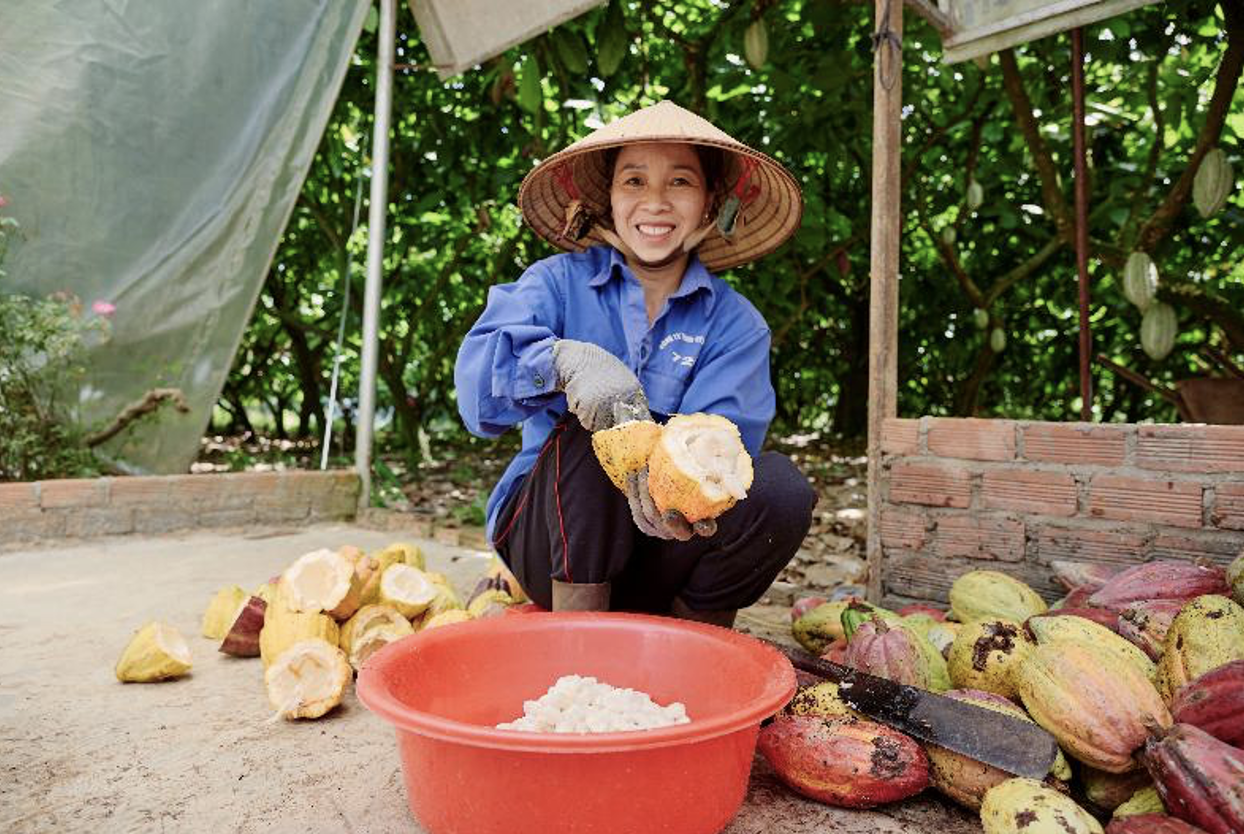
Cocoa farmer Bui Thi Lien collecting wet beans from cocoa pods.
A Boutique Origin with Global Potential
Vietnam’s cocoa sector may be modest in scale, but it is a "hidden gem" in terms of quality. Home to the high-quality Trinitario hybrid, Vietnamese cocoa is ranked among the top 10% of fine-flavor beans worldwide. This excellence was showcased on the global stage when it was awarded "Best Cocoa in the Asia-Pacific" at the prestigious Salon du Chocolat in Paris. Today, the global cocoa landscape is shifting. As climate change disrupts production in traditional hubs like West Africa—causing prices to triple in recent years—international buyers are urgently seeking stable, high-quality, and ethically sourced alternatives. Vietnam is perfectly positioned to fill this niche as a premium, sustainable supplier.
The Challenge: Beyond the Bean
Despite its prestige, the sector faces a "sustainability gap." Conventional farming often leads to soil degradation and a heavy reliance on chemical inputs. Furthermore, significant value is lost through the underutilization of by-products (such as cocoa husks and pulp) and inefficient processing and packaging practices. To remain competitive in a "Green" global market, the sector must move beyond just selling beans; it must adopt a holistic, regenerative approach.
Pioneering a Systemic Shift
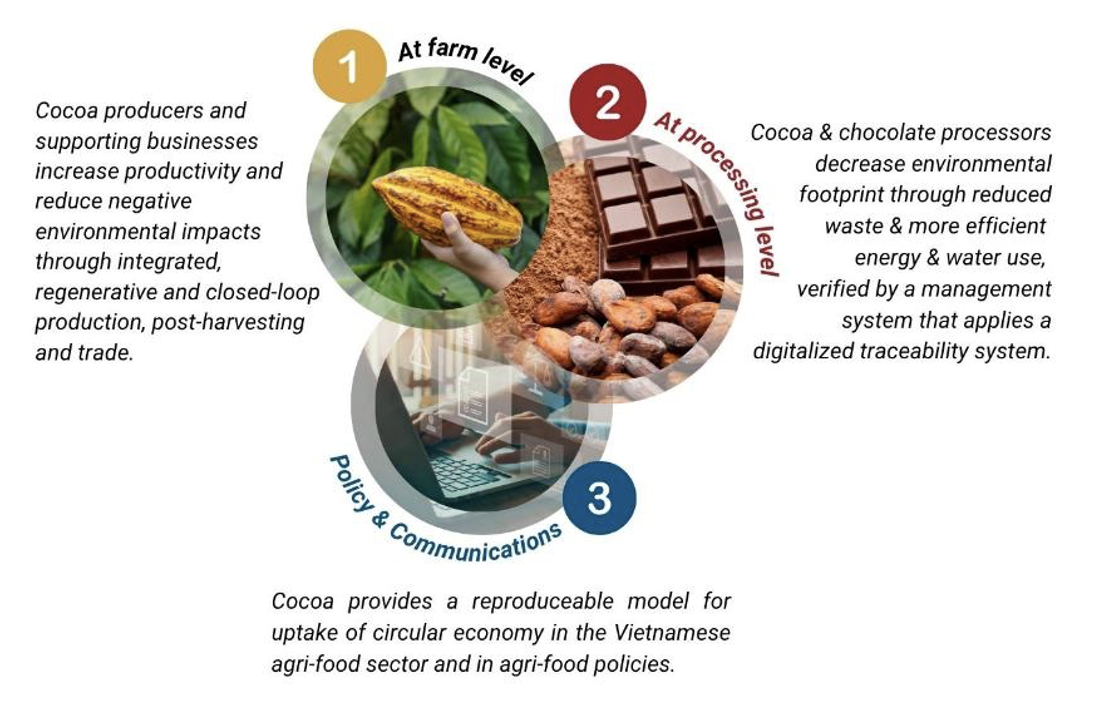
The "Circular Economy Cocoa: From Bean to Bar" project (2022–2026) was launched to address these systemic challenges. By targeting 3,500 cocoa farmers and 500 workers in related businesses, the project transforms the entire value chain. Cocoa was selected as the ideal pilot sector because its manageable size allows for a "proof of concept" that can be scaled across Vietnamese agriculture. To achieve this, the project focuses on three transformative pillars:
Building Knowledge and Changing Mindsets
The transition to a circular economy begins with a shift in people’s awareness. To date, the project has empowered over 3,400 stakeholders, including enterprise technicians, agri-cooperative members, government extension workers, and individual farmers. Through tailored coaching and hands-on training on environmental friendly farming practices, these participants have mastered resource efficiency and waste minimization.
Thousands of farmers are now applying these solutions, resulting in lower production costs, increased household income, and a significant reduction in environmental footprints.
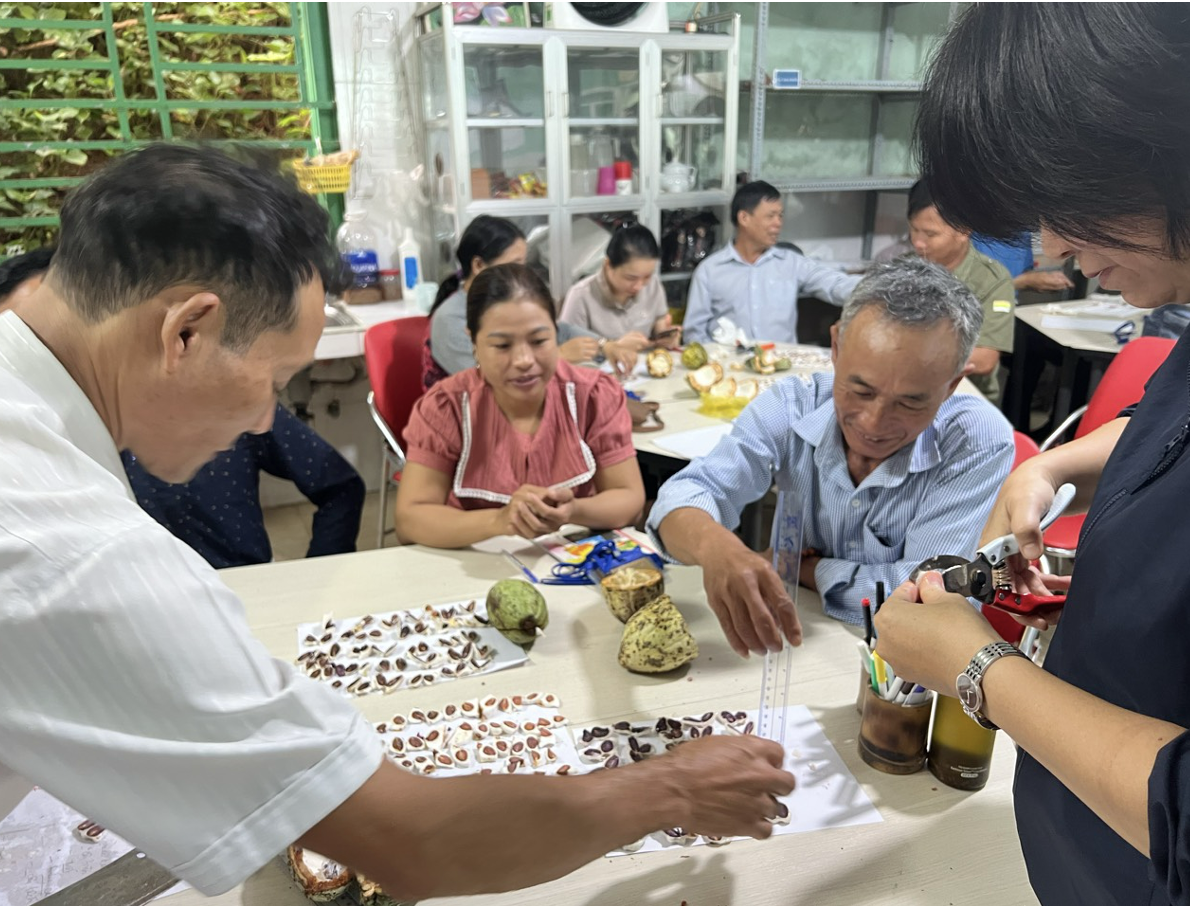
A training class for cocoa farmers and technical staff of cocoa processing companies.
Innovation in the Field: Various solutions for a Greener Future
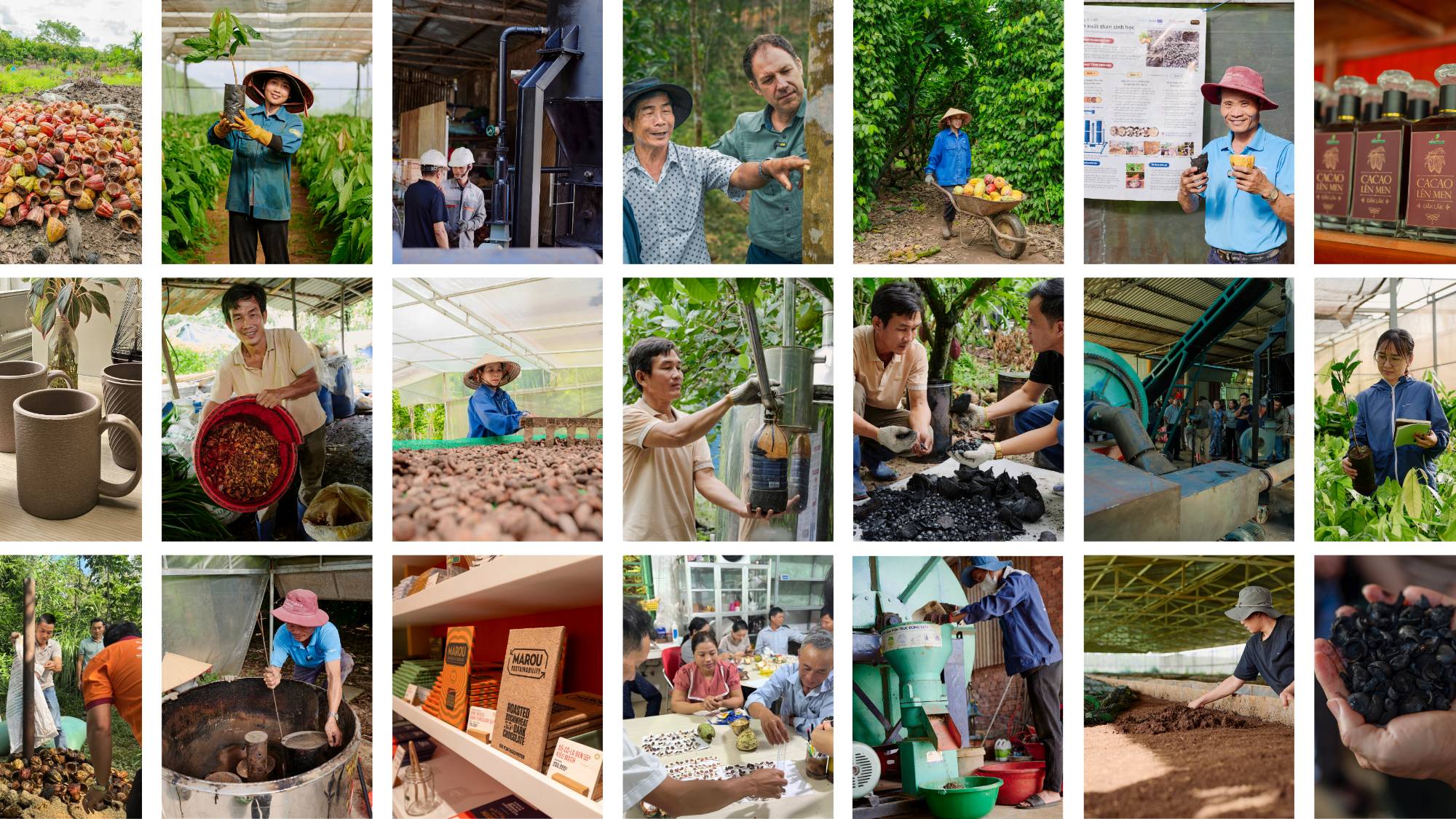
The project has successfully demonstrated nearly 20 circular economy solutions that prove sustainability is also profitable. From transforming agri-waste into bio-products to adopting renewable energy, these models provide a scalable blueprint for the industry.
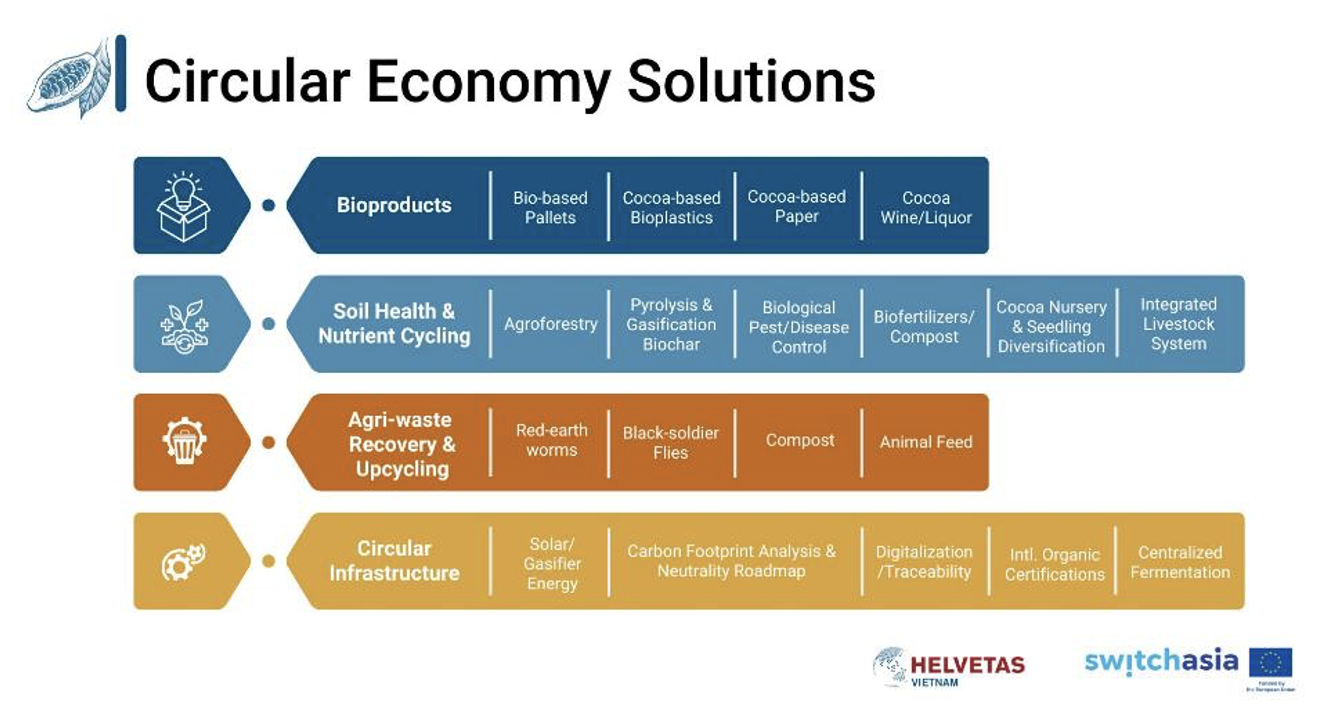
Project Snapshots: Circularity in Practice
Waste to Biochar: Develop and scale up the low-cost biochar production solution using pyrolysis technology at household level.
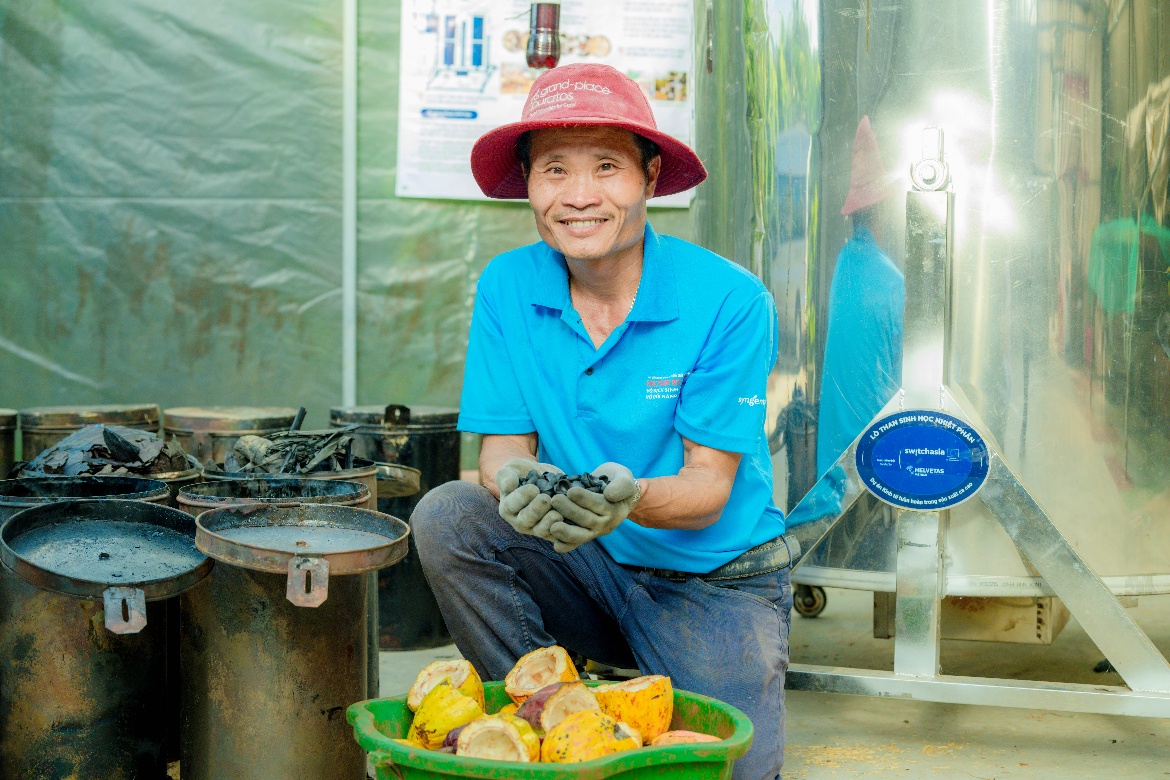
Mr. Nguyen Dinh Thien (Dak Lak province) uses a project-supported pyrolysis kiln to convert cocoa husks and agricultural waste into biochar, a natural soil enhancer.
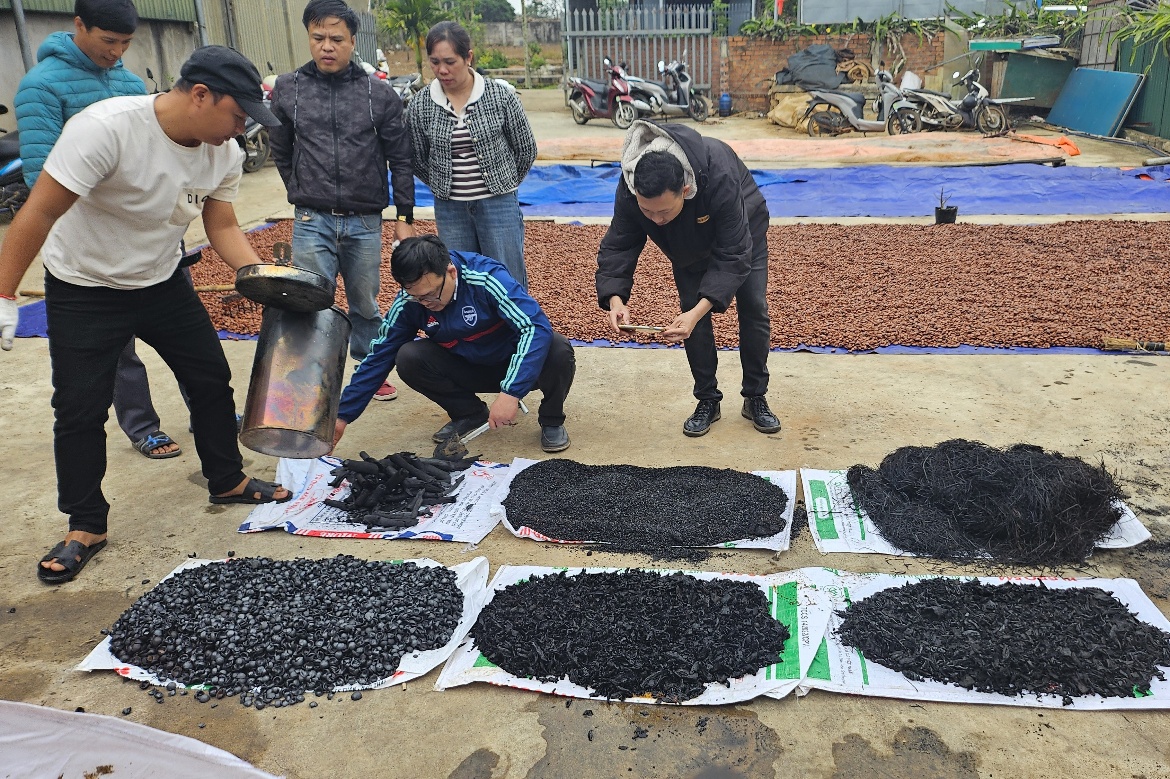
Soil-science experts and the cocoa farmers are testing the quality of the first biochar batch produced with pyrolysis technology in Ea Kar, Daklak.
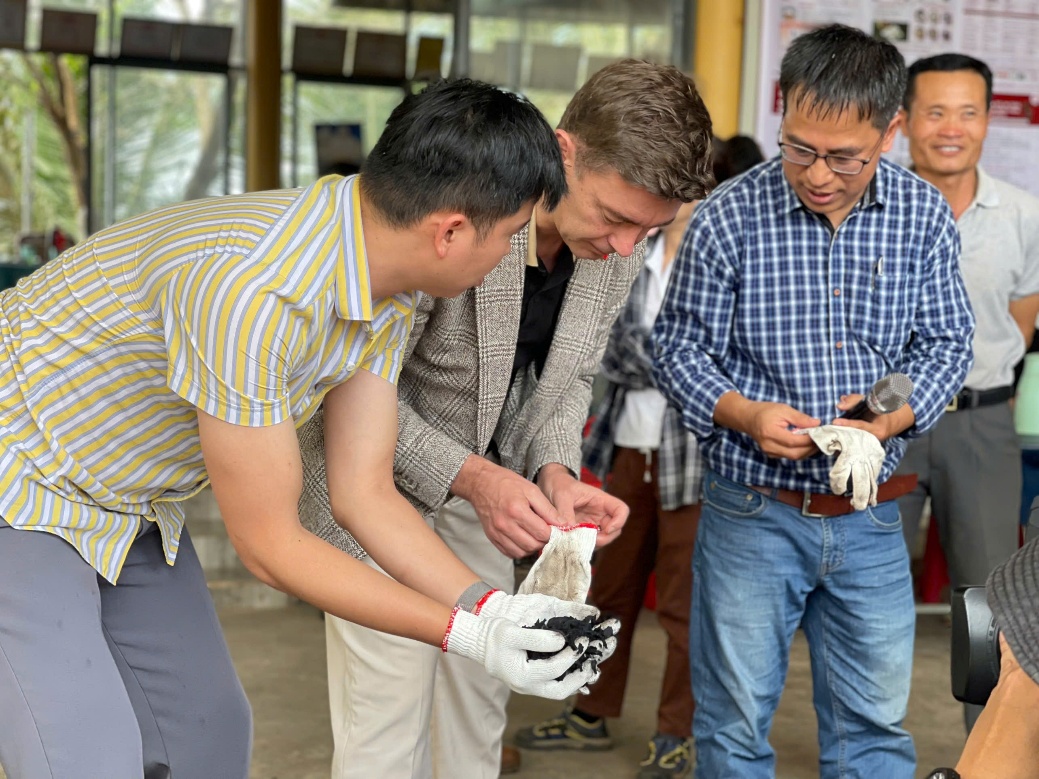
EU Ambassador Julien Guerrier and agri-experts are checking biochar products from pyrolysis kiln in Ea Kar, Daklak.
Waste to Clean Energy: An advanced bean drying system using gasification technology at Nhat Tam Agricultural Service Cooperative. By using agri-byproducts as fuel, it reduces the cost of energy by 60–80%with near-zero smoke emissions.
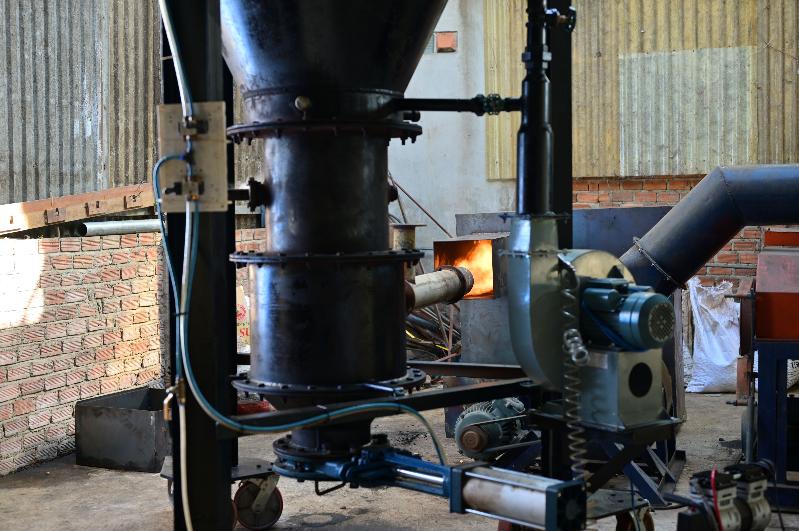
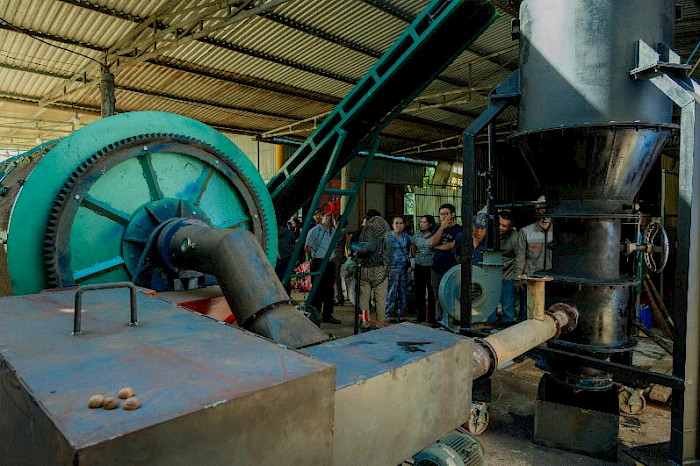
Compared to traditional drying methods, which involved very high costs, heavy labor, and significant material waste, while also polluting the environment with a lot of smoke and dust—this gasifier technology is much better. It emits very little smoke, saves a lot of fuel, and significantly reduces labor. – Ms. Nguyen Hong Thuong, Director of Nhat Tam Agricultural Service Cooperative (Ea Kar, Daklak)
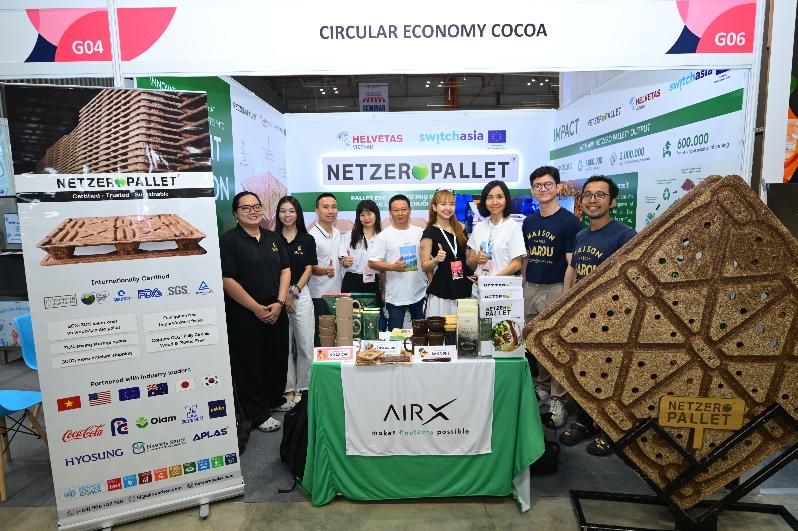
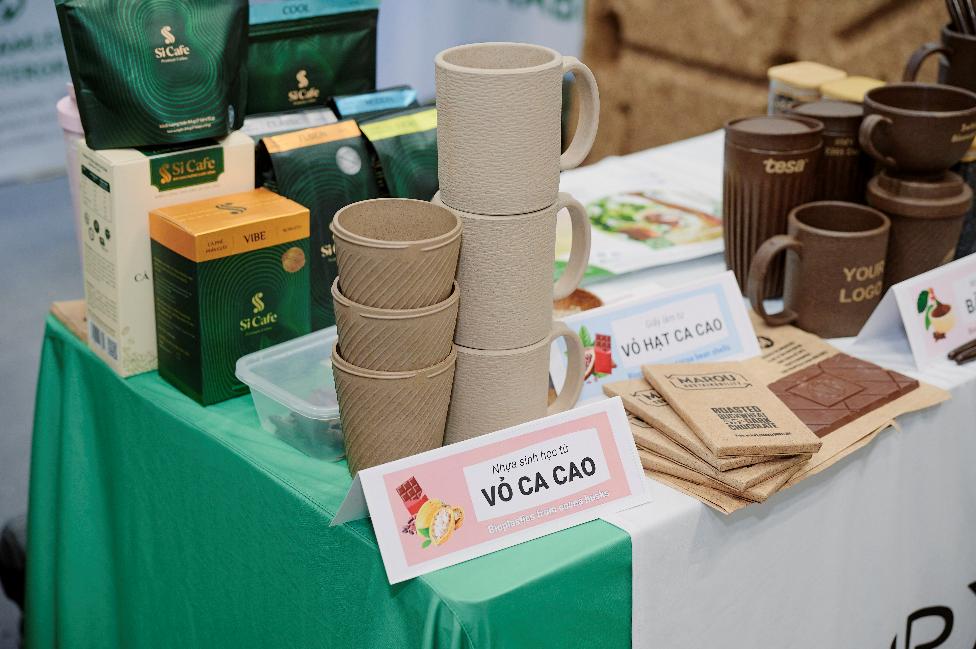
Waste to by-products: Showcasing innovation at international exhibitions - from bioplastics made of cocoa shells to biopaper derived from bean husks and coconut-based biodegradable pallets.
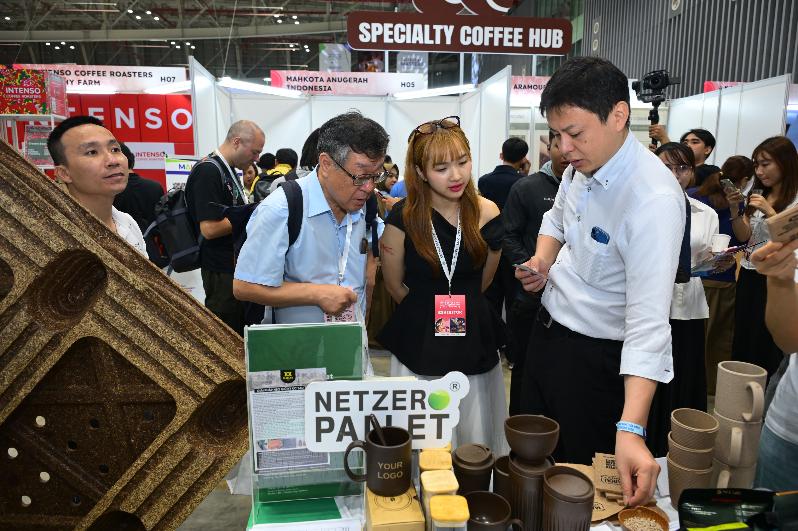
NetZero Pallet is a carbon-negative alternative to traditional wood or plastic pallets, which emit CO2. Each pallet sequesters 34kg of CO2—meaning every 1,000 pallets used removes 34 tons of CO2 from the atmosphere. – Ms. Bui Phuong Thao, Sustainability Director of AirX Carbon, representative of the project consulting team.
Leveraging Investment and Scaling Up
The project’s influence extends far beyond the farm gate. By demonstrating the commercial viability of circularity, we have observed $5.8 million USD in private investment from 10 leading cocoa companies and processors. Furthermore, these circular models are already being replicated in Vietnam’s coconut, cashew, and pepper sectors, multiplying the project's impact across the national agri-food system.
Aligning with National and Global Goals
Helvetas works closely with governmental institutions to ensure these local successes inform national policy. By facilitating public-private dialogues, the project directly supports Vietnam’s National Strategy on Environmental Protection and the National Green Growth Strategy. These efforts ensure that Vietnamese agriculture meets the increasingly strict environmental and social standards of international export markets, particularly the EU.
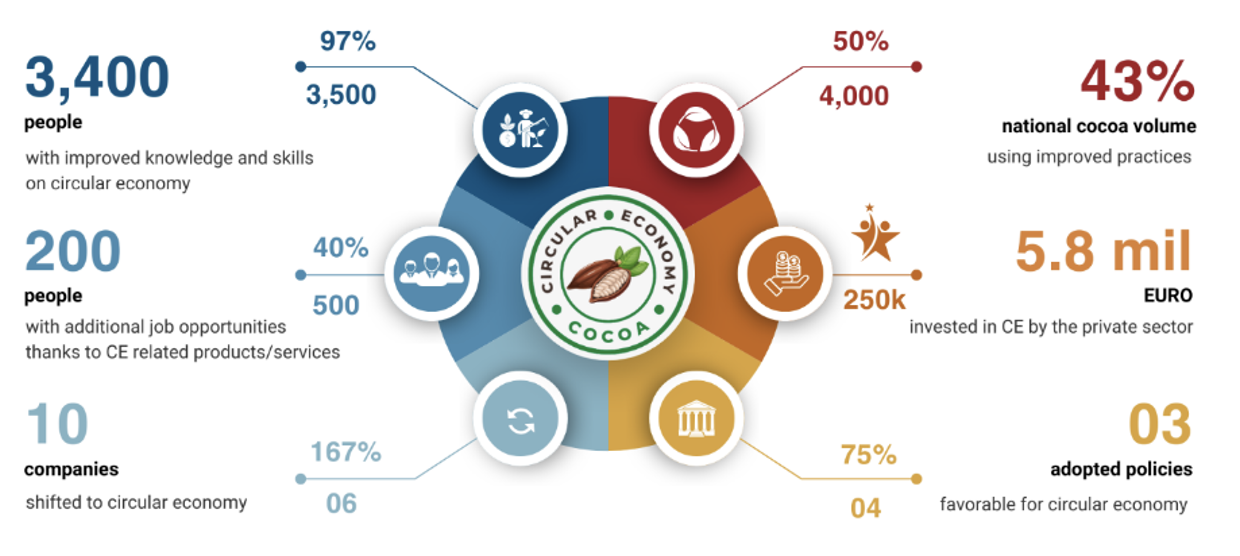
Key project achievements by December 2025
The EU-Cocoa project has demonstrated that the circular economy is not merely an environmental ideal but also a potent driver of economic resilience. By transforming waste into valuable resources and integrating regenerative practices into profitable ventures, the project has laid a clear roadmap for sustainable growth in Vietnam.
The project’s impact is poised to expand in three directions:
- Enhancing Market Competitiveness: By adopting zero-waste and traceable production practices, Vietnam is positioning its cocoa as a premium “green” commodity. This strategic move positions Vietnam to meet the stringent sustainability standards set by the EU, Japan, and the U.S. markets.
- Shaping Private Sector Engagement: The increasing interest from international chocolate manufacturers and agribusinesses will continue to fuel investment in supply chain infrastructure and processing innovation.
- Scaling Beyond Cocoa: Perhaps the most significant impact of this project lies in its replicability. The circular solutions pioneered here - ranging from biomass energy to agri-waste bioproducts - are currently being scaled up across various major Vietnamese agri-food sectors, including coffee, cashew, andcoconut, coffee.