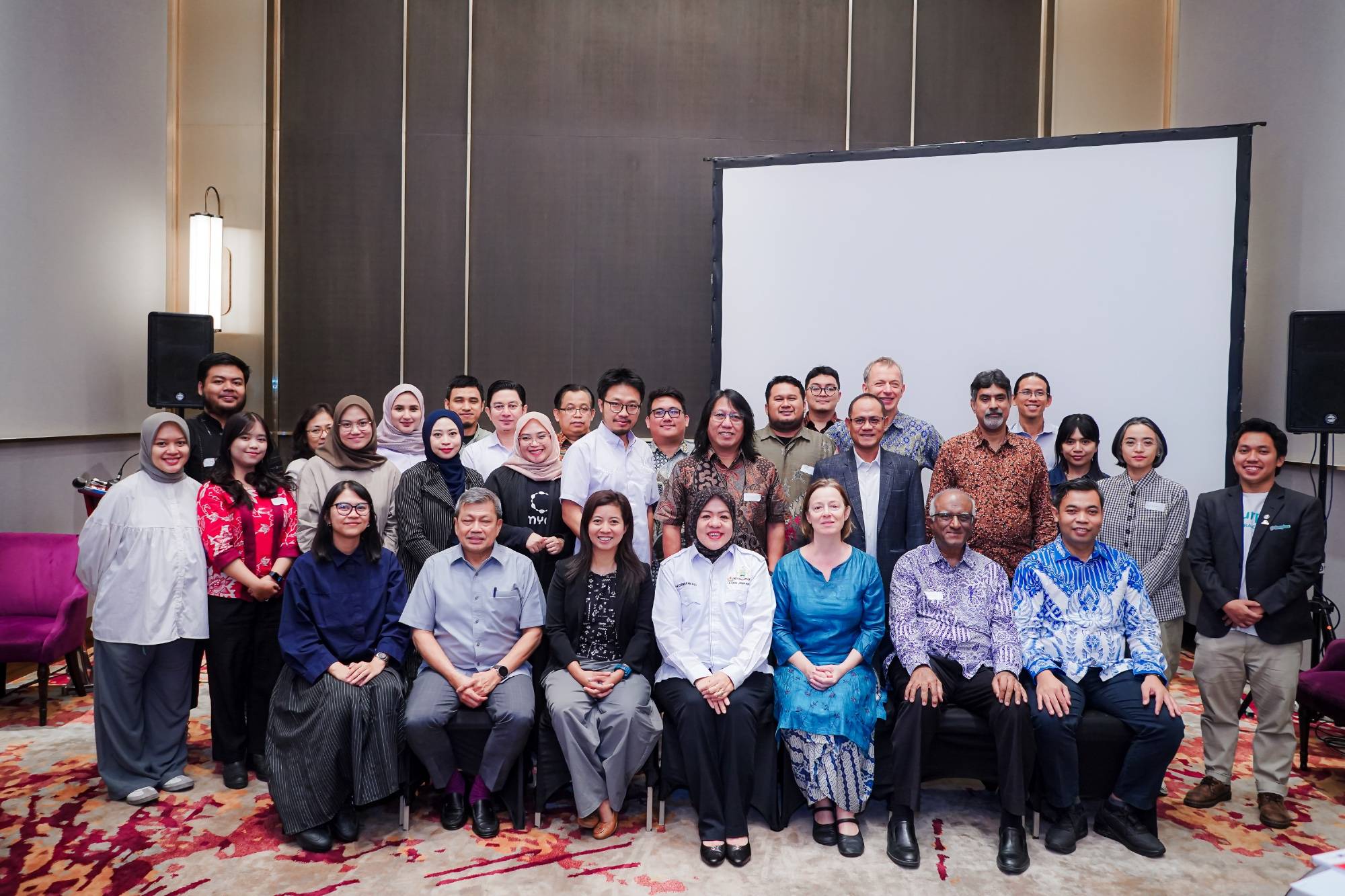
The ASEAN Circular Economy Business Alliance (ACEBA), in collaboration with the Indonesia Chamber of Commerce and Industry (KADIN) and the Indonesian Textile Association (API), and supported by the EU SWITCH-Asia Policy Support Component (PSC), convened the Circular Economy Advantage for Business: West Java Business Forum & Masterclass on 9 December 2025 in Bandung, Indonesia.
The hybrid event brought together business leaders, policymakers, industry associations, development institutions, government official, MSMEs and knowledge partners to discuss best practices of circular economy implementation and their contribution to strengthening competitiveness, resilience, and sustainable growth in Indonesia. The discussions reaffirmed that circular economy is no longer only an environmental agenda, but a strategic business and economic imperative for Indonesia, and across ASEAN and its main trading partners.
Setting the scene: Circular economy as a competitiveness strategy


The forum opened with reflections from Dr. Zinaida Fadeeva, Team Leader of EU SWITCH-Asia PSC, who framed circular economy as a systemic response to intertwined climate, environmental, and economic challenges: "For governments and regional organizations, the priority is to create conditions that help businesses and other organizations adopt good practices—circular practices, waste prevention, emissions reduction, efficiency, and social responsibility— and receive recognition and support for that from both governments and markets.”
Dr. Fadeeva emphasized that enabling policies, coherent market signals, and strong coordination between government, business, and regional platforms are essential to unlock business leadership for circular economy. She highlighted the role of SWITCH-Asia in supporting such enabling environment and in translating regional frameworks into practical, business-relevant action across ASEAN.
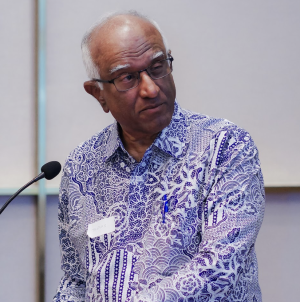
Introducing ACEBA and setting the tone for the day, Mr. Thomas Thomas, Co-Convenor of ACEBA and Chair of ARAIBA Sdn Bhd, stressed the importance of business responsibility and leadership in translating policy ambition into real-world impact: “Circular economy will only deliver impact if businesses lead the transition. ACEBA was created as a platform by and for businesses—to move beyond concepts and enable practical action, collaboration, and scaling up of circular solutions in Indonesia and across ASEAN.”
Mr. Thomas emphasized that circular economy is best approached as a strategic business transformation rather than a compliance or waste-management exercise. He also highlighted the importance of regional collaboration and peer learning among businesses. ACEBA exists to connect businesses across Indonesia and within ASEAN, so that good practices can be shared, replicated, and scaled faster—especially by MSMEs. These messages underscored ACEBA’s role as a practical, business-driven platform supporting companies at different stages of their circular business journey.
Representing the EU Delegation to Indonesia, Ms. Novita Sari, Programme Manager, underscored that circular economy is becoming a global business norm, shaped by evolving market expectations and policy frameworks, particularly in the European Union: “Circular economy is no longer optional—it is a competitive imperative. Through the EU Global Gateway, the EU is partnering with Indonesia to help businesses transition towards more circular, resilient, and future-ready value chains.”
Ms. Sari highlighted the role of the EU Global Gateway in mobilizing sustainable investment, technology cooperation, skills development, and mobilization of financing to support green and circular industrial transformation, including in priority sectors such as textiles and manufacturing. She emphasized that SWITCH-Asia plays a unique bridging role between policy, markets, and enterprises to help create the enabling ecosystem—supporting policy coherence, strengthening business platforms like ACEBA, and showcasing real business cases that prove circular economy works in practice.
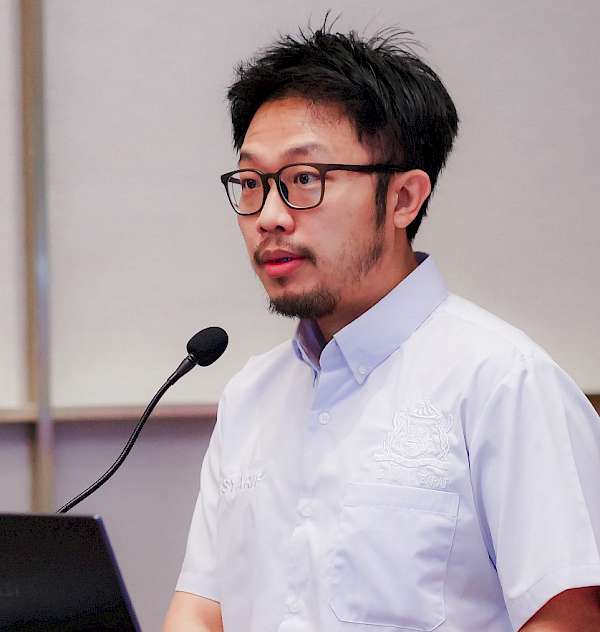
Mr. Ian Sharif, Vice Chair of the Indonesian Textile Association (API), emphasized the readiness of Indonesia’s textile industry to engage in the circular transition, while underlining the importance of collaboration and practical support: “The textile industry understands that circular economy is no longer a choice, but a necessity. What businesses need now are clear signals, practical solutions, and strong partnerships—across industry, government, and international partners—to accelerate this transition.”
Strong business leadership in Indonesia towards circular economy
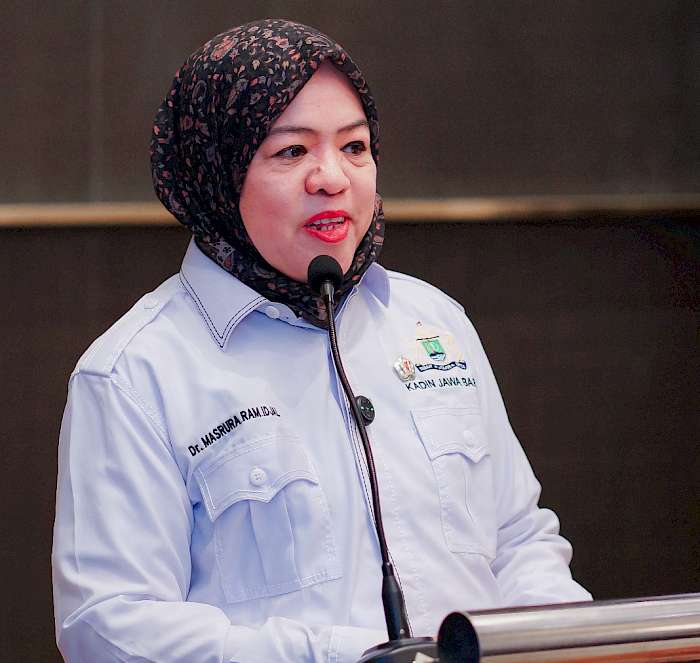
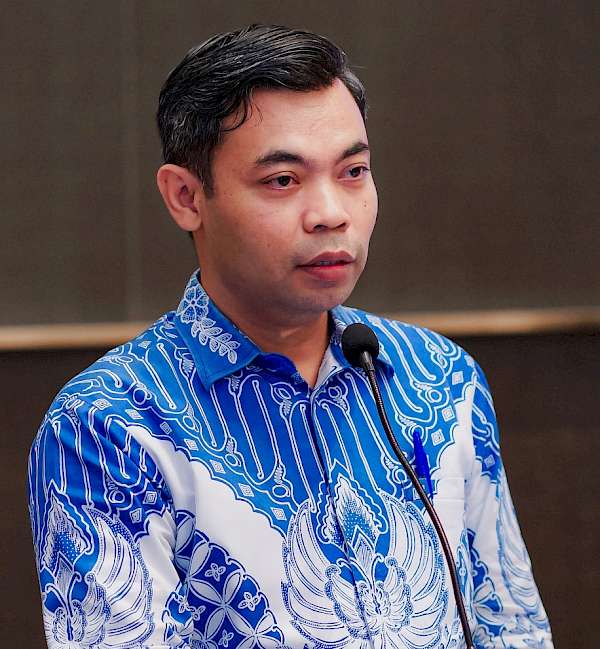
In the opening session, Dr. Masrura Ram Idjal, PhD, Deputy Chair of the West Java Regional Chapter of KADIN, emphasized the strategic importance of circular economy for West Java as an industrial and manufacturing hub—particularly for textiles and automotive sectors. She emphasized the region’s readiness to lead Indonesia’s circular transition, provided that partnerships, enabling policies, and business leadership come together:
"Circular economy is not only an environmental agenda—it is a growth and competitiveness strategy for West Java. West Java has enormous potential to become a front runner—but this journey requires partnership, enabling regulation, and strong business leadership. To unlock this potential, businesses need clear regulations, incentives, and access to finance and markets. KADIN sees its role as connecting enterprises with government, financial institutions, and partners such as ACEBA and SWITCH-Asia.”
Mr. Rizky Aditya Wijaya, Director of Textile, Leather and Footwear at the Ministry of Industry, emphasized that circular economy is becoming a core pillar of Indonesia’s industrial transformation, particularly for export-oriented sectors. He noted that rising global expectations on sustainability, traceability, and resource efficiency—driven by international markets and regional initiatives—are making circular economy a strategic imperative for the textile, leather, and footwear industries.
Mr. Rizky underscored the importance of partnerships between government, industry associations, and international initiatives, encouraging businesses to engage with platforms such as ACEBA, KADIN, and EU-supported programmes including SWITCH-Asia to accelerate implementation and scale circular solutions across Indonesia’s manufacturing sector:
“Sustainability and circular economy are crucial for textile sector and beyond. Circular economy is closely linked to competitiveness—through efficiency gains and diversification of materials. Collaboration across business, government, and knowledge institutions is essential.”
Session 1: Policy and business drivers shaping the transition
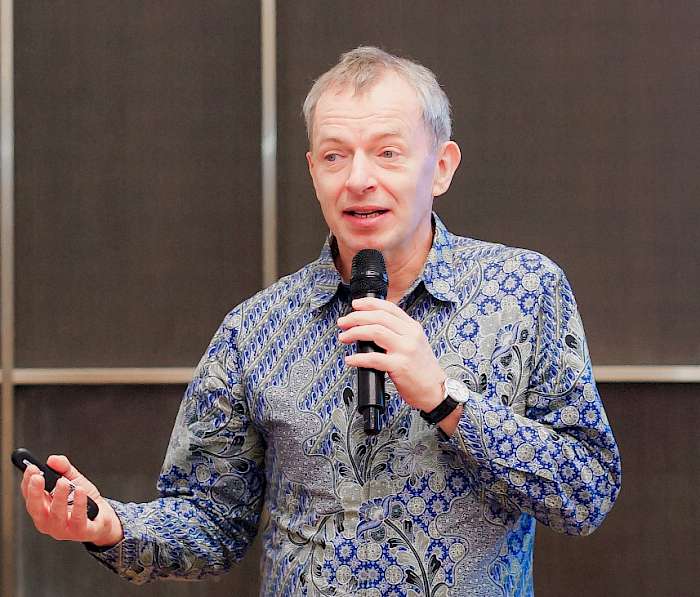
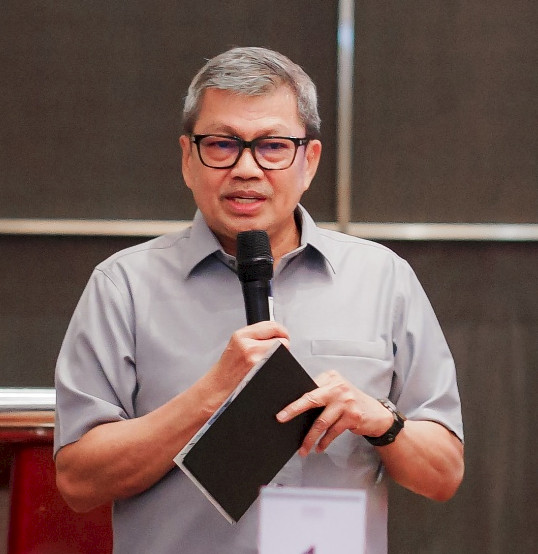
Dr. Rene van Berkel, ACEBA Co-Convenor and SWITCH-Asia Senior Expert, outlined key global, regional, and national drivers accelerating the circular economy transition:
- Circular economy has become a global policy priority as reflected by some 70 national circular economy roadmaps and/or action plans. EU policies provide a comprehensive framework for an economic transformation through the EU Circular Economy Action Plan, the EU Ecodesign for Sustainable Products Regulation, and the EU Strategy for Sustainable and Circular Textiles.
- ASEAN-wide commitments to circular economy, sustainable procurement, and extended producer responsibility, supported by national roadmaps and action plans in Indonesia and most other ASEAN Member States.
- Global market shifts driven by sustainability standards and buyer expectations.
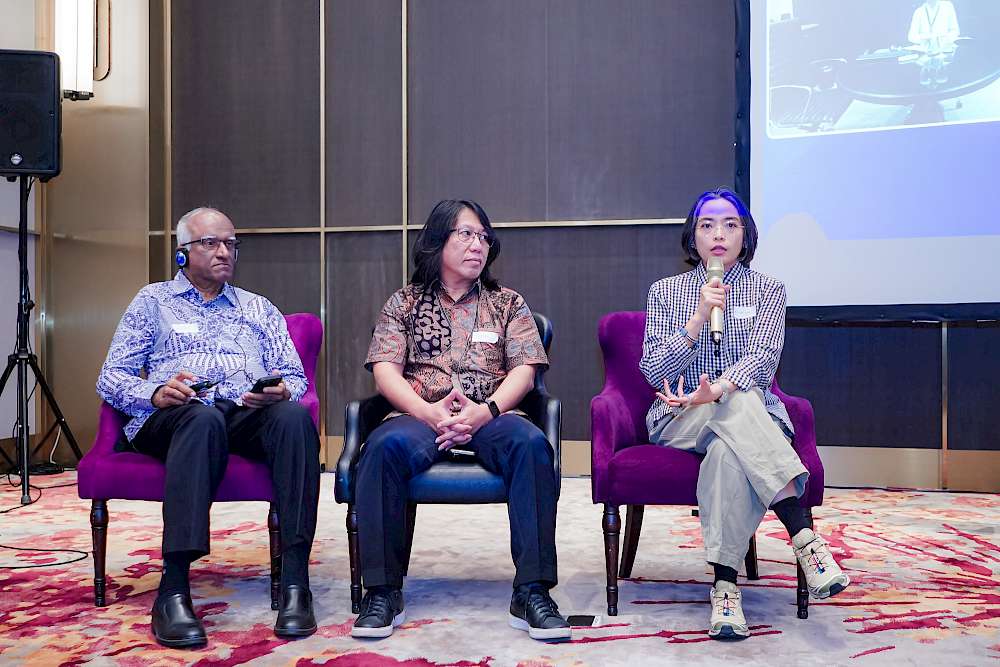
A panel discussion with industry leaders and experts, moderated by Mr. Basrie KAMBA, Chair (RTL) and CE national expert of SWITCH-Asia PSC, explored current and emerging motivations of Indonesian businesses to act—ranging from market access and cost savings to regulation, investor pressure, and self-driven innovation—and what will drive action beyond 2026. The session speakers highlighted that policy signals, technology innovation, and market expectations are converging to accelerate circular economy implementation in Indonesia’s textile and manufacturing sectors.
Dr. Muhammad Widodo, Associate Professor at STTT Bandung, emphasized the importance of technical foundations, noting that circularity in textiles depends on design, material selection, and production processes that enable reuse and recycling, and use of materials, chemicals, water, and energy efficiently in all life cycle stages: “Circular economy in textiles starts with design and science—what we make today determines what can be reused or recycled tomorrow.”
Ms. Aryenda Atma, CEO and Founder of Pable, elaborated on her company’s achievement to create Indonesia’s first textile to textile recycling company. She highlighted the role of digital solutions in preventing waste and improving efficiency across value chains: “Technology allows businesses to prevent waste before it happens by improving traceability and resource use.”
From an industry perspective, Mr. Amit Baid, Head of Business Development at Asia Pacific Rayon, stressed that circular economy strengthens resilience and competitiveness of businesses in rapidly changing international markets: “Circular economy is about managing risk, diversifying materials, and staying competitive in global markets.”
Concluding the session, Mr. Thomas Thomas, ACEBA Co-Convenor, reinforced that while policy signals are clear, businesses need practical pathways and collaboration to move from commitment to implementation—echoing the alignment between ASEAN priorities and EU sustainability frameworks driving market transformation towards a circular, resource efficient and low carbon economy.
Session 2: Circular economy in action: Business experiences from Indonesia

To set the scene for the session, Dr. Rene Van Berkel provided a brief synopsis of the different concept and tools that have come together under the umbrella of circular economy. Given this diversity, ACEBA with support from SWITCH-Asia PSC, engaged businesses around Southeast Asia in formulating and refining a principles-based framework for business action on circular economy. This positions circular economy as a responsible business and innovation strategy that drives efficient and circular use of materials, energy, and water, and fosters switching to renewable energy and materials. The suitability of this Framework is illustrated by a collection of 88 ASEAN circular economy business cases, including 16 from Indonesia, that show how circular economy helps companies perform well, through cost savings, market and product development, etc., whilst also doing good for climate and planet and people and societies.
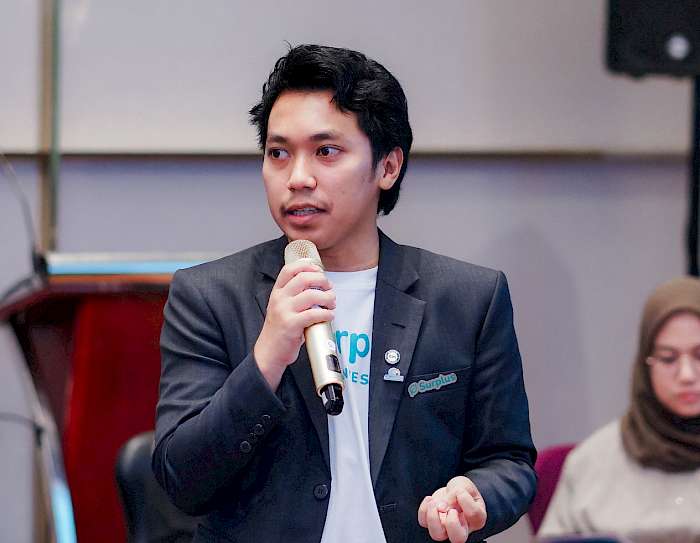
Panel 2 moderated by Mr. Thomas showcased how Indonesian businesses are already translating circular economy principles into practical, scalable solutions across different sectors. Mr. Muhammad Agung Saputra, CEO of Surplus Indonesia, highlighted how digital platforms can prevent waste before it occurs by redistributing surplus food, noting that “the most circular solution is the one that avoids waste altogether.”
Similarly, Ms. Aliya Sarastita, CEO of The New Factory, emphasized that circularity in fashion must start at the design stage, stressing that “design decisions determine whether products can be repaired, reused, or recycled.” Both speakers demonstrated that innovation and technology play a critical role in improving efficiency while delivering social and environmental benefits.
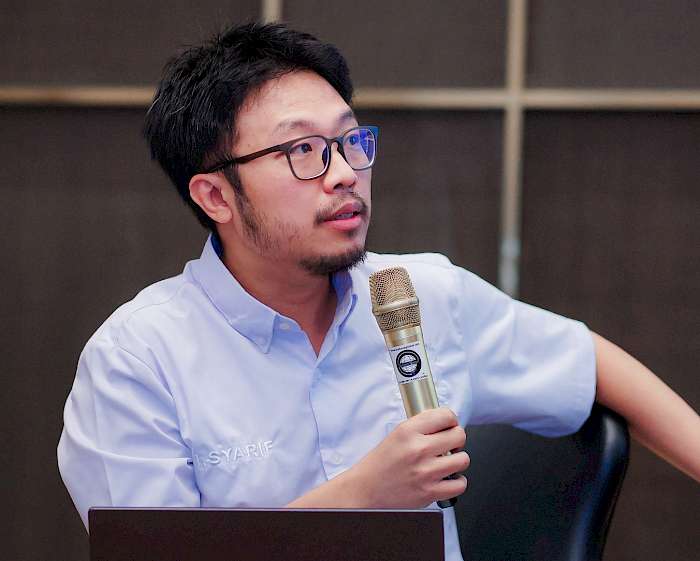
From an industry and materials innovation perspective, Mr. Ian Syarif, Vice Chair of API and Director of Sipata Moda, underlined that circular economy is becoming a business necessity for the textile sector, driven by global buyer requirements and competitiveness. He noted that “efficiency, material innovation, and collaboration across the value chain are essential for the industry to remain competitive.”
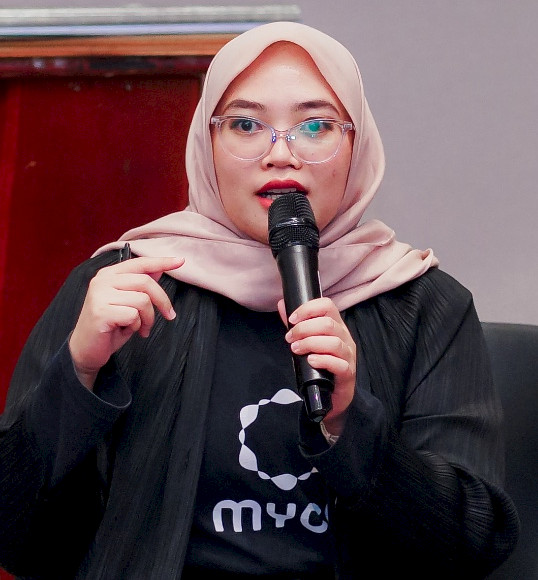
Complementing this, Ms. Annisa Wibi, COO and Co-Founder of Mycotech Lab (MYCL), showcased how alternative materials can support circularity and local value creation, emphasizing that “innovation in biomaterials allows us to reduce reliance on virgin resources while creating new economic opportunities.”
Together, the speakers reinforced that circular economy is not a single solution, but a portfolio of approaches—enabled by collaboration, innovation, and supportive ecosystems—that can be scaled across Indonesia’s manufacturing and creative industries.
Session 2 demonstrated that circular economy delivers the greatest impact when it is integrated into core business operations and decision-making. Speakers shared practical experiences on improving resource and energy efficiency, applying circular product design, developing new business models, and strengthening value-chain collaboration, particularly in textiles and manufacturing. A key message was that implementation requires tailored approaches, supported by practical tools, peer learning, and access to knowledge and partnerships. Platforms such as ACEBA, with support from SWITCH-Asia PSC, were highlighted as critical enablers—helping businesses translate policy ambition and market signals into scalable, bankable, and competitive circular solutions aligned with ASEAN and EU sustainability frameworks.

A collective pathway forward
Looking ahead, the forum concluded with a shared commitment to move from dialogue to implementation through sustained collaboration. Businesses were encouraged to actively engage with ACEBA by sharing circular economy business cases, participating in peer-learning activities, and identifying opportunities to pilot and scale solutions. KADIN West Java, home to 8,000+ manufacturers and over 500,000 MSMEs, and industry partners will work to map existing circular initiatives and enterprises across the region, while continued coordination among government agencies, financial institutions, industry associations, and knowledge partners will be critical to strengthen enabling policies, access to finance, skills development, and market incentives, particularly for SMEs. As a signal of commitment, The New Factory and Surplus were inaugurated as additional Indonesian Participants to ACEBA, committing to lead the circular economy transition by example, in their business engagements and products and processes.
Reflecting on the broader pathway forward, Dr. Zinaida Fadeeva, SWITCH-Asia PSC Team Leader, emphasized that lasting impact depends on creating the right enabling environment for businesses to lead the transition. By aligning business leadership, policy support and capacity building, and investment and partnerships, Indonesia—starting with West Java—is well positioned to advance a circular, competitive, and inclusive economy, contributing meaningfully to ASEAN’s long-term sustainability and economic resilience.
From ambition to action: ACEBA’s practical approach
The afternoon Masterclass shifted the focus from why to how. Participants were introduced to core circular economy concepts and product strategies, circular business models and solution design, and ACEBA’s SADI Action Menu—Stocktake, Ambition, Delivery, and Integration—as a practical roadmap for enterprise-level implementation. The session equipped professionals from operations, product development, procurement, and sustainability functions with tools to initiate or scale circular practices within their organizations.
For more information or to get involved, visit www.aceba.co.