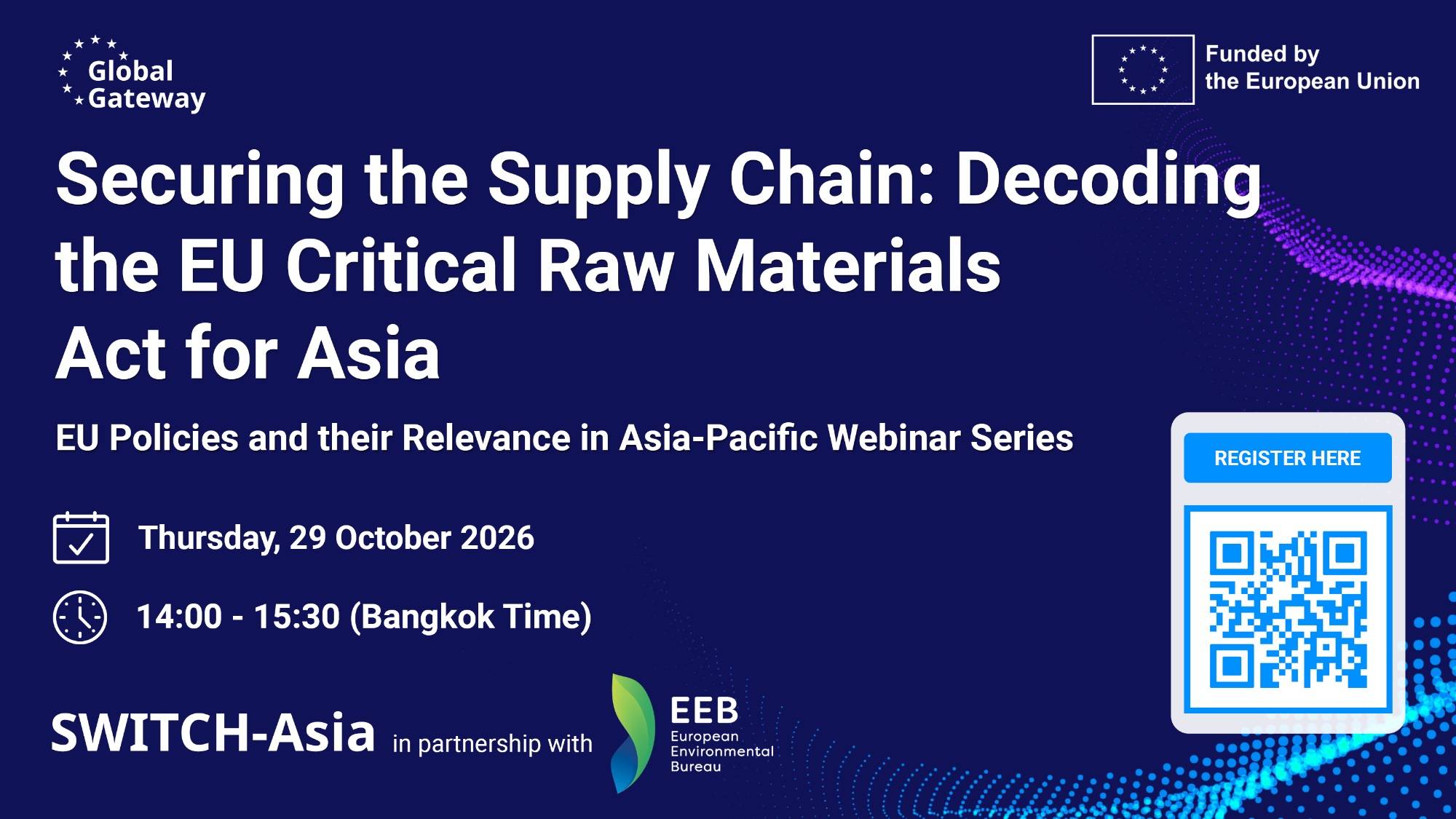
WHEN: 29 October 2026 I TIME: 14:00 - 15:30 (Bangkok Time) I Register HERE
Background:
The European Union’s reliance on third countries for raw materials critical to the green and digital transitions, such as lithium, cobalt, and rare earth elements, presents major economic vulnerabilities. In response, the EU enacted the Critical Raw Materials Act to secure its strategic autonomy by setting 2030 targets: 10% domestic extraction, 40% domestic processing, 25% domestic recycling, and limiting reliance on any single non-EU country to no more than 65% for any strategic material.
While many welcome the CRMA’s emphasis on higher recycling targets (up to 25%), some consider that the act fails to set binding targets for absolute material consumption reduction, relies heavily on voluntary certification schemes, and lacks explicit mandates for Free, Prior, and Informed Consent (FPIC) for Indigenous and local communities affected by mining projects.
For Asia, the primary engine of global mineral refining and electronics manufacturing, the CRM Act carries significant implications. It pushes Asian exporters toward strict supply chain transparency, heightened environmental footprint reporting, and enhanced secondary material recovery, while simultaneously shifting EU trade policies toward strategic bilateral partnerships.
Webinar Session:
The EU SWITCH-Asia Policy Support Component and the European Environmental Bureau, are convening the webinar, Securing the Supply Chain: Decoding the EU Critical Raw Materials Act for Asia to:
- Analyze the CRM Act Framework: Break down the EU Critical Raw Materials Act standards, 2030 benchmarks, and circularity mandates.
- Examine challenges: Evaluate environmental concerns regarding raw material consumption reduction, FPIC rights, and secondary material recovery standards.
- Assess the Impact on Asian Supply Chains: Discuss how EU environmental footprint tracking and compliance demand will reshape Asian manufacturing, mining, and export strategies.
- To explore how the EU Critical Raw Materials Act can foster EU–Asia partnerships through circular economy strategies—such as material efficiency, substitution, and recycling—that drive local value creation in Asia and align with the Global Gateway.
Moderator:
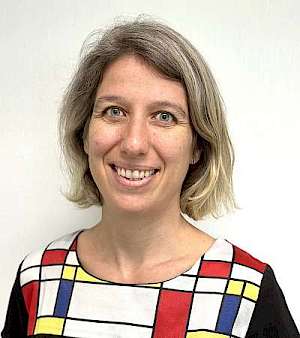
Elodie MARIA-SUBE, Expert on EU policy development and partnership building at the SWITCH-Asia Policy Support Component
Elodie is specialized in European Affairs related to topics of circular economy, SCP, climate change and environmental management, and has extensive experience in stakeholder consultation and engagement at the EU level, as well as with high-level officials in Ministries of Environment and Finance in Asia. For over a decade, Elodie has worked in South and South-East Asia on environment and climate change. She is currently leading the SWITCH-Asia Technical Advisory project on Sustainable/ Green Public Procurement for Transformation.
Speakers
 Diego MARIN, Senior Policy Officer for Raw Materials and Resource Justice, European Environmental Bureau (EEB)
Diego Marin works with the Global Policy team. He hold a Master in International Development with a specialization in Political Strategy and Communication from the University of Kent, Brussels School of International Studies. During his academic career, Diego mainly focused on environmental issues, indigenous rights, and poverty alleviation. He previously interned for the Red Cross EU Office working on development projects. Diego spent some time in Cajamarca, Peru where he completed his thesis on the impact of extractivism and its link to poverty exacerbation in the region.
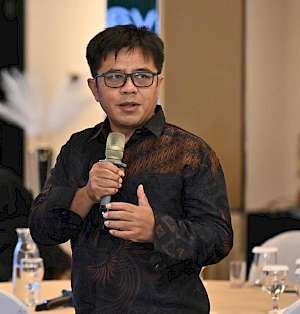 Pius GINTING, Coordinator, Action for Ecology and People's Emancipation (AEER)
Pius Ginting is a person who has been dedicated to mining and energy issues for sustainability and environmental justice for more than 15 years. Formerly attended Electrical Engineering ITB, he eventually gained a Law Degree at Universitas Bung Karno. He has experience in various positions as a researcher, campaigner and analyst on issues regarding mining and energy and the environment in general. He has numerous publications in the form of books, policy papers and research reports on mining and energy, and is also a guest lecturer at universities and a speaker at forums discussing coal and nickel mining. From 2017 until now, Pius is the AEER Coordinator.
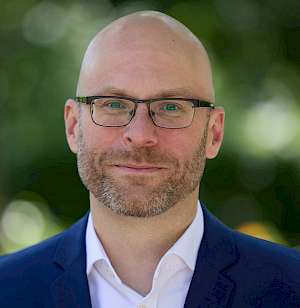 Michael RECKORDT, Head of Department, PowerShift e.V.
Michael Reckordt has been working on German and European raw materials policy at PowerShift since May 2013. Holding a degree in geography, he is the former executive director of the Philippines Office (2009 to 2013) and former coordinator of the AK Rohstoffe network (2013 to 2020). He was international election observer in the Philippines in 2010 and 2016. His work focuses on binding regulatory frameworks in Europe to improve conditions in mining areas worldwide.
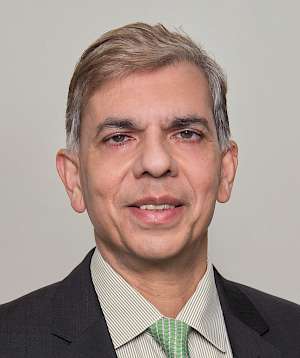 Jayant Menon, Ph.D, Visiting Senior Fellow, ISEAS - Yusof Ishak Institute, Singapore
Dr. Jayant Menon is a Visiting Senior Fellow at the ISEAS–Yusof Ishak Institute in Singapore, where he is associated with the Regional Economic Studies Programme. He holds a Bachelor of Economics with Honours (First Class) from La Trobe University, as well as a Master’s and a Ph.D. in Economics from the University of Melbourne. Prior to his role at ISEAS, Dr. Menon served as a Lead Economist in the Office of the Chief Economist at the Asian Development Bank.
Agenda
|
29 October 2026 |
|
|
14:00 |
Introduction to the Webinar Dr Zinaida FADEEVA, Team Leader, SWITCH-Asia Policy Support Component |
|
14:05 |
Presentation: The CRM Act Framework Diego MARIN, Senior Policy Officer for Raw Materials and Resource Justice, European Environmental Bureau (EEB) |
|
14:20 |
Panel Discussion: Navigating European CRM Demands from an Asian Market Perspective Moderated by Elodie MARIA-SUBE, Key Expert on EU policy development and partnership building, SWITCH-Asia Policy Support Component
|
|
15:00 |
Q&A |
|
15:25 |
Concluding Remarks and Next Steps Dr Zinaida FADEEVA, Team Leader, SWITCH-Asia Policy Support Component |