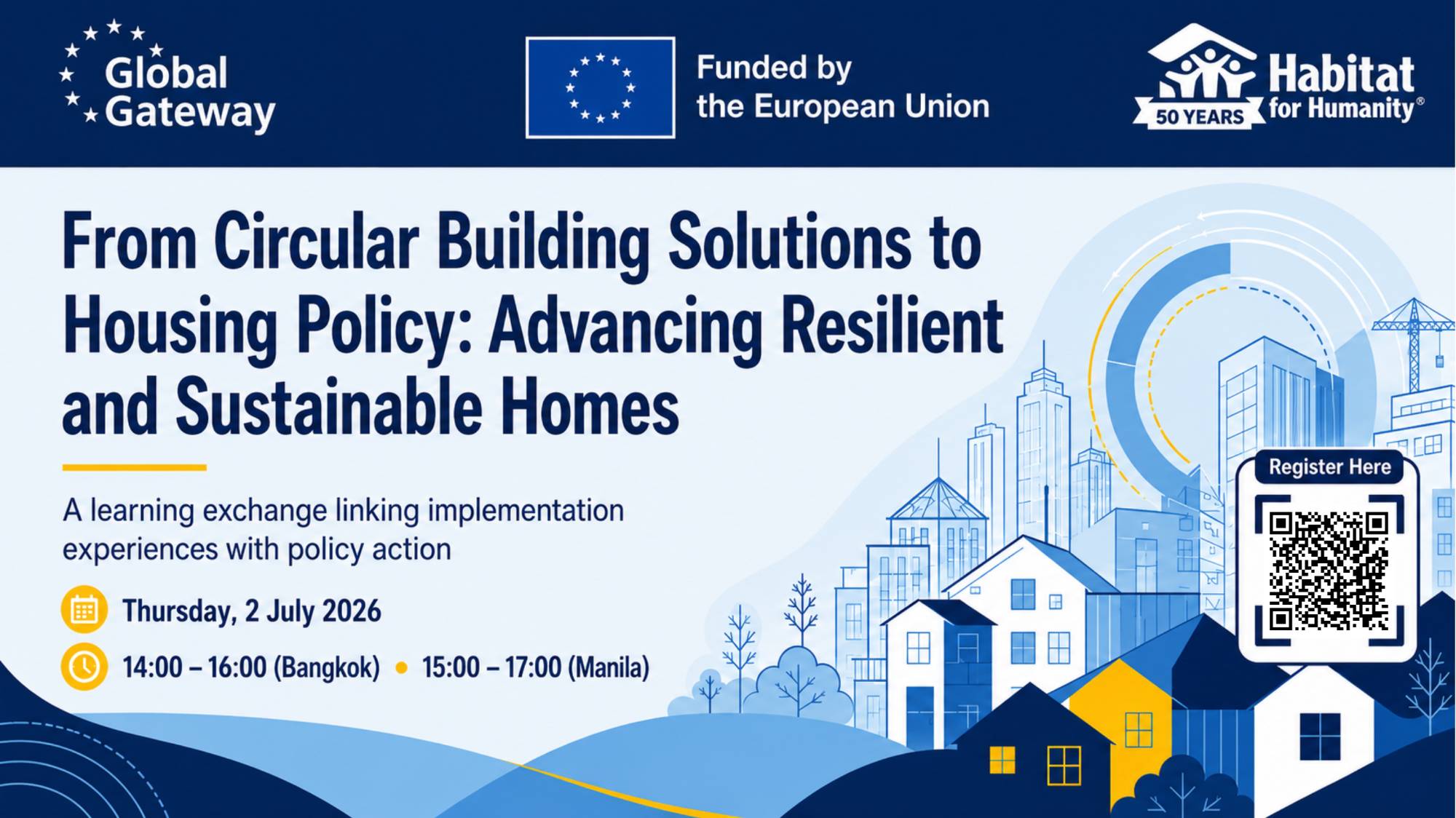
WHEN: 2 July 2026 I TIME: 14:00 - 16:00 (Bangkok Time) / 15: 00 - 17:00 (Manila) I Register HERE
Background
The development agenda for adequate, accessible, and affordable housing in Asia faces compounding challenges, including constrained public budgets, rapidly growing urban demand, high exposure to climate hazards, and inequalities in land and basic service access.
To address these vulnerabilities, this learning session bridges the gap between circular economy practices and housing resilience. In a circular economy framing, sustainability expands and safeguards housing outcomes by reducing lifecycle costs through durable design, repairability, and incremental upgrading. Prioritising locally sourced, low-carbon materials lowers exposure to price volatility and supply disruptions while creating pathways for safe, formalised secondary-material markets. This holistic approach proves that circularity goes far beyond simple waste management—it is a cornerstone for long-term climate resilience and social equity.
Building on a history of impactful collaboration, including the 8th Asia-Pacific Housing Forum in 2021 and the 2023 Sustainable Consumption and Production (SCP) Innovation Awards in Suwon, Korea, EU SWITCH-Asia and Habitat for Humanity are uniting once again in 2026. This joint session combines technical field practices with enabling policy frameworks to advance sustainable housing systems across the region.
Key Learning Objectives
- Share Evidence-Based Field Practices: Highlight locally adapted, resilient housing models and low-carbon construction methods showing proven scalability within national policy frameworks.
- Advance Material Circularity: Demonstrate how utilizing building material circularity and secondary-material markets can reduce supply-chain risks and emissions without compromising safety or structural durability.
- Mainstream Enabling Policy & Standards: Discuss the key role of modernized building codes, green public procurement rules, inclusive financing, and risk-informed planning in scaling up sustainable housing.
- Highlight Socio-Economic Co-benefits: Explore how sustainable housing systems directly contribute to wider strategic outcomes in health, education, equity, and local job creation.
Moderators
 Sabha Khawaja, Regional Director for Southeast Asia, Habitat for Humanity’s Terwilliger Center for Innovation in Shelter
Sabha Khawaja serves as the Regional Director for Southeast Asia at Habitat for Humanity’s Terwilliger Center for Innovation in Shelter. She is a key advocate for expanding affordable housing finance and impact investing, working to help low-income families secure safe housing across the region.
 Cosima Stahr, Expert for EU SWITCH-Asia Policy Support Component
Cosima Stahr is Director at adelphi and leads several major projects in Europe and Asia. As an expert in corporate sustainability, she is responsible for project development, implementation and evaluation in the context of climate change, environmental protection and sustainable finance. With more than 15 years of experience, she combines deep technical knowledge with practice‑oriented delivery. She has extensive experience working with the European Commission, federal ministries, the private sector and non‑governmental organisations. In SWITCH-Asia, she has led the work on Sustainable Housing and Building.
Speakers
 Zinaida Fadeeva, Team Leader at the SWITCH-Asia Policy Support Component
Zinaida Fadeeva is the Team Leader of the Policy Support Component of the SWITCH-Asia Programme. Zinaida has over 25 years leading international professional experience in policy for and practice of sustainable consumption and production (SCP) and Education for Sustainable Development, amongst others working with the United Nations University Institute for the Advanced Studies of Sustainability (UNU-IAS). Her work has focused on diverse topics such as tourism, plastics, construction, small and medium enterprises, procurement and lifestyle. Zinaida has worked extensively with governments, private sector, international organisations and academia in East, South East, South and Central Asia.
 Sanjeev Hada, Associate Director of Program Operations, Asia-Pacific, Habitat for Humanity
Sanjeev Hada is currently engaged as the Associate Director for Programs at the Asia Pacific Regional Office in The Philippines for Habitat for Humanity International. Sanjeev has 15 years of experience in International disaster response, disaster risk reduction and disaster preparedness initiatives working in the Asia Pacific Region with the Red Cross Movement, and other International agencies in the past. He brings strong understanding of program development, coordination and management deliveries in the areas of housing and infrastructure services.
Marco Lamperti Tornaghi, Joint Research Centre (JRC), European Commission
Marco Lamperti Tornaghi currently works at the European Commission - Joint Research Centre (JRC), in the unit Safety and Security of Buildings. Marco does research in Civil and Structural Engineering, with focus on the Earthquake Response of Precast Concrete Buildings and their connections; the integration between Safety and Sustainability; innovative building materials (Cement-based composites).
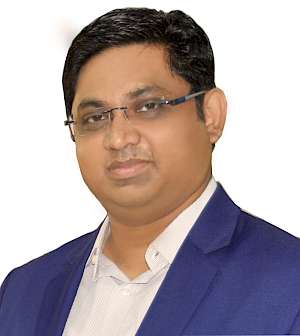 Architect Md. Nafizur Rahman, Principal Research Officer, Housing and Building Research Institute (HBRI)
Architect Md. Nafizur Rahman is the Principal Research Officer at the Housing and Building Research Institute (HBRI) and former Deputy Director at SREDA, specializing in eco-housing, energy efficiency, and sustainable building standards. A key figure in Bangladesh's green building policy, he co-authored the BEEER System Guideline, developed the GreenARCH rating system, and edited the Energy Efficiency chapter of the Bangladesh National Building Code (BNBC). He holds a Bachelor's in Architecture from the University of Asia Pacific and a Master's in Renewable Energy Technology from Dhaka University. Professionally certified as an IFC EDGE Expert/Auditor and Certified Energy Manager, his contributions earned him the Best Officer in the Power Sector award in 2016, as well as selection for the U.S. Department of State’s International Visitor Leadership Program (IVLP).
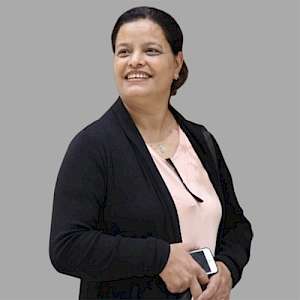 Usha Maskey Manandhar, former Advisor, Policy, Governance and GESI Integration, MinErgy - EU SWITCH-Asia BEEN Nepal project
Usha Maskey Manandhar has over twenty-five years of work experience in projects aimed at ethical labour management, sustainable livelihoods, climate change mitigation & adaptation, energy, WASH and building construction sectors. Her responsibilities in the EU funded SWITCH-Asia BEEN project in Nepal included facilitating engagement, collaboration and capacity building of government entities at federal and local levels to develop and adopt enabling policies. Upon her long-term experience working with private sector (primarily small and medium enterprises), she contributes in designing and managing interventions to enlarge market share of the energy efficiency and renewable energy integration in building sector in the BEEN project.
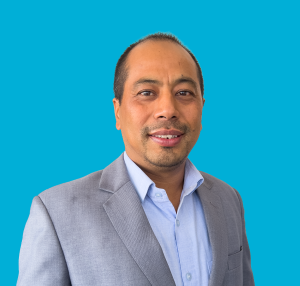 Lachhindra Maharjan, Program Director of Habitat for Humanity Nepal
Lachhindra Maharjan is Program Director of Habitat for Humanity Nepal. In his role, he provides strategic leadership for housing, climate resilience, and systems transformation initiatives. With more than 15 years of experience in development and humanitarian programming, he specializes in advancing safe, adequate, and climate-resilient housing solutions for vulnerable communities. He has led partnerships with government, academia, and private sector actors to promote sustainable housing systems and played a key role in the development of Nepal’s first National Bamboo Building Guideline. Lachhindra also serves on Habitat for Humanity International’s Advocacy Subcommittee, contributing to global discussions on housing rights and resilience.
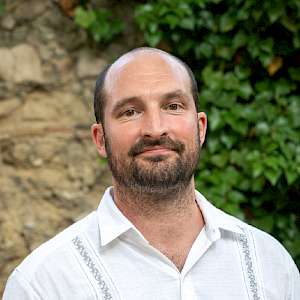 Xavier Rat, Country Representative and Project Manager for GERES
Xavier Rat is an international development and sustainability professional currently serving as the Country Representative and Project Manager for GERES (Groupe Energies Renouvelables, Environnement et Solidarités). Within the framework of the EU-funded SWITCH-Asia Programme, he leads the "Switch-off Air Pollution in Mongolia's Cities" (SOAP) project. His work focuses on implementing energy-efficient housing retrofits and sustainable heating solutions to mitigate urban air pollution and improve living conditions in Mongolia's ger districts.
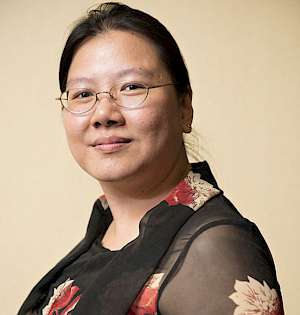 Elisa Sutanudjaja, Executive Director, Rujak Center for Urban Studies, Indonesia
Elisa Sutanudjaja is a prominent Indonesian architect and urban scholar dedicated to equitable urban governance and community-led sustainability in Jakarta. As the Co-Founder and Executive Director of the Rujak Center for Urban Studies, she works directly with local communities to develop alternative, affordable housing models—such as the award-winning Kampung Susun Akuarium project—and to advocate for climate justice. An alumnus of Universitas Tarumanagara and the University of New South Wales, her work blends rigorous spatial research with grassroots civic engagement.
 Dr. Xiuxiu Gao, Senior Engineer at China Architecture Design & Research Group
Xiuxiu Gao is a Senior Engineer at the China Architecture Design & Research Group and holds a PhD in Environmental Economics and Environmental Management from the University of York, UK. She also serves as the Secretary-General of the Special Committee for Human Settlements within the Chinese Society for Sustainable Development. Dr. Gao has been involved in several European Framework Programme and international collaboration projects focused on urban sustainability. Her current work primarily centers on scientific research related to sustainable urban and rural development, improvement of human settlements, and the technology transfer and demonstration of research outcomes.
 Van Abino, Specialist, Market Systems and Entrepreneurship, Habitat for Humanity’s Terwilliger Center for Innovation in Shelter
Van Abino is a specialist with Habitat’s Terwilliger Center for Innovation in Shelter. She leverages a market systems development framework to champion inclusive, climate-resilient housing. Her work focuses on strengthening green micro, small and medium enterprises and local artisans—including researching circular economy solutions like sustainable bamboo—to scale eco-friendly building practices. By cultivating localized entrepreneurship and bridging supply chain gaps, she helps mobilize private sector investment to transition traditional housing aid into self-sustaining, market-driven ecosystems.
Agenda
|
2 July 2026 |
|
|
14:00 |
Introduction to the Webinar and Opening Remarks
|
|
14:15 |
Panel Discussion 1: Circular economy cases enabling resilient and adequate housing and building Moderated by Sabha Khawaja, Regional Director for Southeast Asia, Habitat for Humanity’s Terwilliger Center for Innovation in Shelter
|
|
15:15 |
Panel Discussion 2: Connecting linkages between the circular and housing agendas and policy requirements Moderated by Cosima Stahr, Expert for EU SWITCH-Asia Policy Support Component
|
|
15:50 |
Concluding Remarks
|