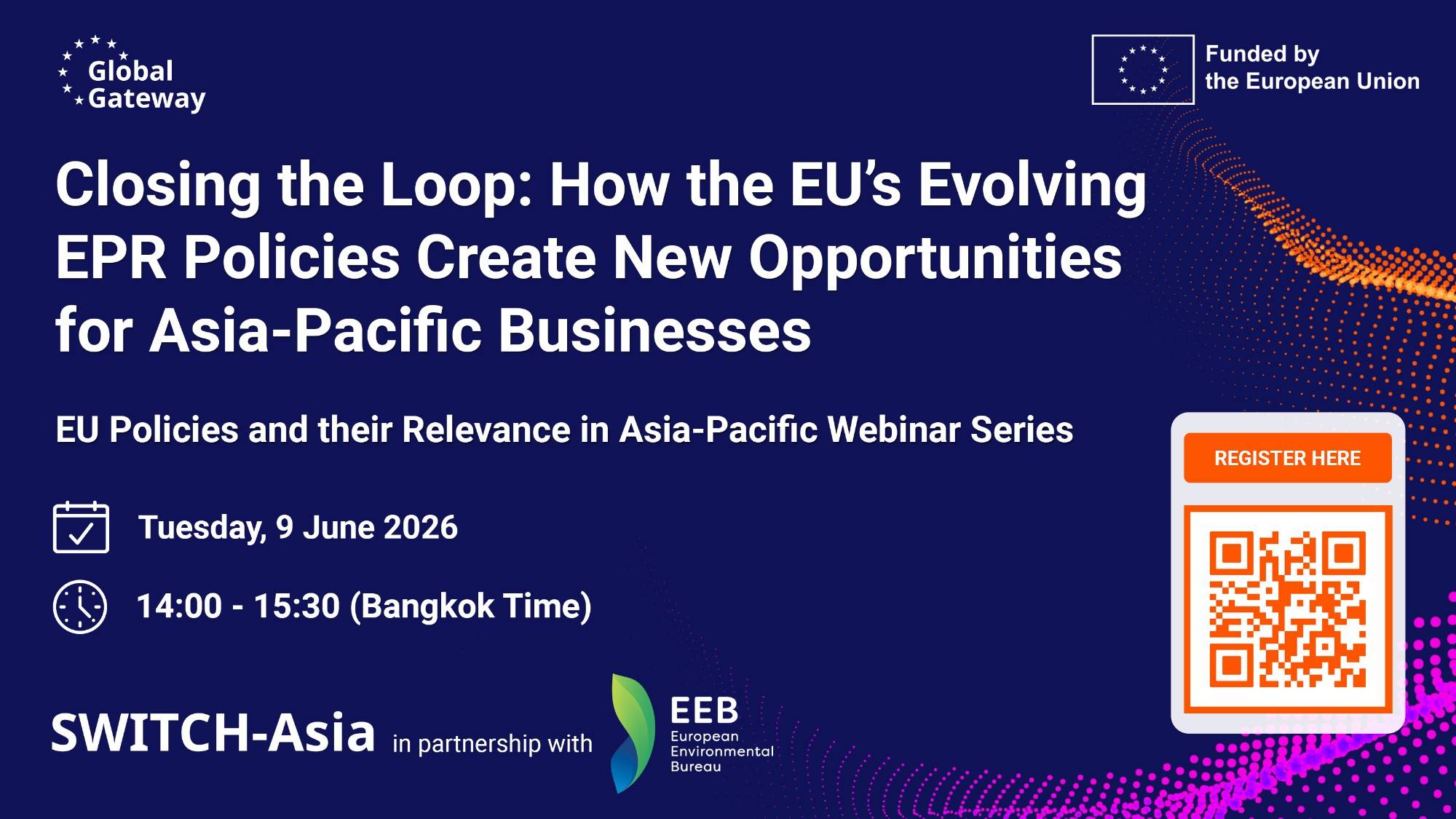
WHEN: 9 June 2026 I TIME: 14:00 - 15:30 (Bangkok Time) I REGISTER Here
Background:
Extended Producer Responsibility (EPR) is an environmental policy approach in which a producer’s responsibility for a product is extended to the post-consumer stage of a product’s life cycle. Traditionally, manufacturers have focused on the production and sale of goods, leaving the burden of waste management to local municipalities and taxpayers. However, the EU’s shift toward a circular economy has transformed EPR from a simple waste collection mechanism into a powerful driver for sustainable design. By requiring producers to be physically or financially responsible for the end-of-life treatment of their products, these policies incentivize the development of more durable and recyclable goods.
The landscape of EPR in the European Union is currently undergoing a significant evolution. While established directives already cover electronics, batteries, and packaging, new policies are introducing "eco-modulation" of fees, where producers pay less if their products are easier to repair and recycle, or include recycled content. Furthermore, the scope is expanding to include products imported into the EU market, requiring manufacturers in third countries to appoint authorized representatives or ensuring that importers and distributors remain responsible for compliance. This shift ensures that all players accessing the EU market adhere to the same environmental standards, regardless of where the product was originally manufactured.
In the Asia-Pacific region, repair and reuse are already ubiquitous and often the first choice for consumers due to their affordability and accessibility. However, as products become more complex and software-driven, Asian businesses and policy-makers face new challenges in maintaining these circular practices. Implementing EPR in this context requires a different approach than in Europe, as it must account for the region's massive informal waste sector and diverse market structures. By understanding the EU's legislative trajectory—particularly regarding information requirements and repairability—Asian stakeholders can better navigate international market access while inspiring local legislation that reflects the unique economic realities of the Asia-Pacific region.
Webinar Session:
The EU SWITCH-Asia Policy Support Component and the European Environmental Bureau, are convening the webinar, Closing the Loop: How the EU’s Evolving EPR Policies Create New Opportunities for Asia-Pacific Businesses to:
-
Analyse the Evolving EU EPR Framework: Discuss the recent shift in EU policy from basic waste management to "eco-modulated" fees and mandatory schemes for new sectors like textiles, and how these changes impact global supply chains.
-
Evaluate Challenges and Opportunities for Asian Exports: Examine the requirements for Asian businesses to access the EU market under new EPR regulations, including the necessity for authorized representatives and compliance with stricter transparency standards.
-
Facilitate Policy Knowledge Exchange: Identify lessons learned from the rollout of the EU’s circular economy directives to inspire and inform the development of effective EPR frameworks across Asia-Pacific nations.
Moderator:
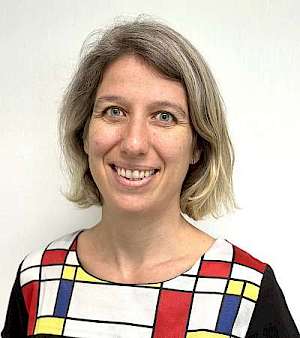 Elodie MARIA-SUBE, Key Expert on EU policy development and partnership building, SWITCH-Asia Policy Support Component
Elodie is specialized in European Affairs related to topics of circular economy, SCP, climate change and environmental management, and has extensive experience in stakeholder consultation and engagement at the EU level, as well as with high-level officials in Ministries of Environment and Finance in Asia. For over a decade, Elodie has worked in South and South-East Asia on environment and climate change. She is currently leading the SWITCH-Asia Technical Advisory project on Sustainable/ Green Public Procurement for Transformation.
Speakers:
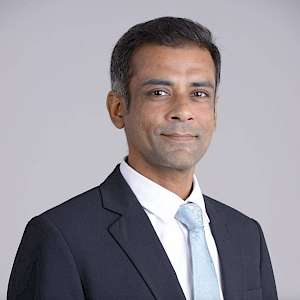 Sachin JOSHI, Key Expert, SCP Policy Options and SDG12 Progress, SWITCH-Asia Policy Support Component
Sachin is a sustainability professional with 25 years of experience in policy research and advocacy, and business advisory. He has led policy work at the Business 20 in 2020, and also led sustainability vertical at the Confederation of Indian Industry, India's largest business association. His work has spanned diverse sustainability topics with considerable focus on green public procurement, circular economy, business model innovation, ESG frameworks, disclosures, and ratings, human rights, and corporate social responsibility. He is leading the EU SWITCH-Asia work on strengthening EPR in Central Asia and enabling effective EPR systems in Asia.
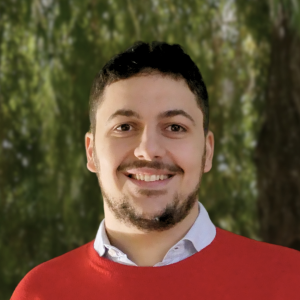
Marco MUSSO, Deputy Policy Manager for Circular Economy and Fiscal Reform, European Environmental Bureau (EEB)
Marco is Deputy Manager of the EEB Circular Economy team. He works on circular economy and fiscal reform, focusing on financial, fiscal, and economic instruments for the green transition, as well as on policies to prevent packaging waste and plastic pollution. He has experience in environmental policy and public affairs, with a focus on circular economy. Before joining the EEB, he worked on as Public Affairs and Communication Manager for the European Organisation for Packaging and the Environment. Previously, he worked in the European Parliament for a Member of the Environment, Public Health and Food Safety Committee, and completed an internship with the Association of Italian Joint Stock Companies.
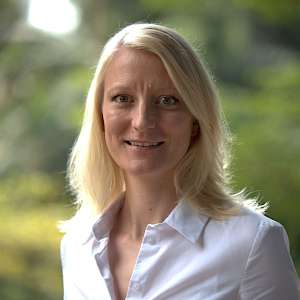
Stefanie BEITIEN, Managing Director and Board Member, PCX Solutions
Stefanie is focused on advancing a circular economy and work towards a world without plastic pollution. With over 20 years of experience in sustainability and management, she currently leads PCX Solutions, an NGO founded in the Philippines. She focuses on plastic policy, manages a standard for plastic recovery projects, and advises Governments and companies on plastic responsibility. She also serves on the Steering Committee of the PREVENT Waste Alliance and supports the Global Plastic Treaty. Stephanie was Head of Market Transformation at WWF-Singapore, leading a team of experts covering key environmental issues.
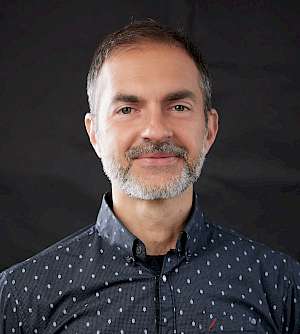 Joan Marc SIMON, Founder, Zero Waste Europe
Joan Marc Simon is a social entrepreneur and author. Trained in economics and international cooperation, he has 20 years of experience in zero waste, the circular economy, and EU policies. He founded Zero Waste Europe in 2011 and directed it until 2022, Mission Zero Academy in 2021, where he serves on the board, and Global DRS Platform in 2023, where he works as Platform Strategist.
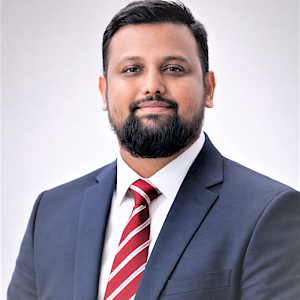 Ali Asraf KHAN, Sustainability and Value Chain Advisor, Embassy of Denmark, Dhaka, Bangladesh
Ali Asraf Khan is a sustainability expert currently serving as the Sustainability and Value Chain Advisor at the Embassy of Denmark in Dhaka, Bangladesh. Since December 2022, he has been a key contact for sustainability and supply chain advisory, working to promote Denmark as a leader in sustainable business solutions. Ali brings extensive technical experience to this role, having previously managed environmental and sustainable production at Bay City Textilhandels GmbH and led technical projects for Green Project WST® Limited. His expertise spans ESG certification, circular product execution, and environmental auditing across the textile and apparel sectors. Ali holds a BSc in Textile Engineering and is currently pursuing an MBA focused on the Apparel and Textile Value Chain.
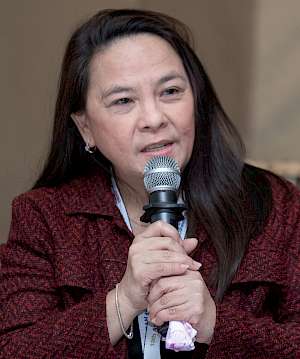 Maria Cristina A. FRANCISCO, Chief of Environmental Education and Information Division, Environmental Management Bureau, Department of Environment and Natural Resources, the Philippines
Maria Cristina A. Francisco is Chief of the Environmental Education and Information Division at the Environmental Management Bureau, Department of Environment and Natural Resources, Philippines. She leads national initiatives on environmental awareness, ecological education, and sustainability, including campaigns on plastic pollution, youth engagement, and coastal and marine protection. Her work also focuses on strengthening partnerships with schools, government agencies, and civil society to advance environmental education and support sustainability programmes across the Philippines.
 Frithjof LAUBINGER, Environmental Economist, Circular Economy, Environment Directorate, OECD
Frithjof Laubinger is an environmental economist in the OECD Environment Directorate, specialising in Circular Economy policy. Over the past eight years, he has been closely involved in much of the OECD’s analytical and policy work on EPR. Frithjof holds a BSc in liberal arts and sciences from Amsterdam University College and an MSc in environmental economics and policy from University College London.
Agenda:
|
9 June 2026 |
|
|
14:00 |
Introduction to the Webinar
|
|
14:05 |
Presentation: The EU’s New EPR Landscape: Navigating Regulatory Shifts
|
|
14:20 |
Panel Discussion Moderated by Elodie MARIA-SUBE, Key Expert on EU policy development and partnership building, SWITCH-Asia Policy Support Component
|
|
15:00 |
Q&A |
|
15:25 |
Concluding Remarks and Next Steps
|